Texas homeowners face a unique landscaping challenge: intense heat, variable rainfall, and diverse soil types across the state. Creating a beautiful backyard that thrives in these conditions doesn’t require exotic imports or constant upkeep. Modern backyard landscaping ideas for Texas emphasize drought resilience, smart hardscape design, and practical shade solutions that work with the climate rather than against it. Whether managing a small urban lot or sprawling suburban property, these strategies balance aesthetics with functionality, and the good news is most projects fit a typical DIYer’s skill set.
Key Takeaways
- Backyard landscaping ideas for Texas should prioritize drought-resistant native plants like Esperanza, cenizo, and native grasses that thrive with minimal water once established.
- Drip irrigation systems reduce water loss by up to 50% compared to overhead spray systems, making them essential for water-efficient Texas yards.
- Build functional outdoor living spaces with permeable patios, decks, or seating areas—even 400–600 sq ft patios transform underused yards into gathering destinations.
- Permanent shade structures like pergolas and native trees (live oak, Texas ash) create a 5–10 degree temperature drop, turning uncomfortable patios into livable outdoor rooms.
- Incorporate water features wisely by using small recirculating fountains or rain gardens that manage stormwater, prevent mosquito breeding, and often qualify for municipal rebates.
- Apply 3–4 inches of wood-chip mulch around plant beds to moderate soil temperature, reduce evaporation, and stabilize native plantings in Texas heat and clay soils.
Design A Drought-Resistant Landscape
Texas water restrictions and unpredictable rainfall make a drought-resistant landscape a practical investment, not a luxury. The key is shifting away from traditional turf-heavy yards toward smart plant selection and water-efficient hardscape. Start by auditing your site: map sunny (south/west-facing) and shaded areas, check soil composition, many Texas yards are clay-heavy or alkaline, and note existing grade and drainage.
Native Plants and Xeriscaping Techniques
Native plants are the foundation of any drought-resistant Texas landscape. Species like Esperanza (Tecoma stans), Texas privet, native muhly grass, and blackland prairie sage thrive with minimal supplemental water once established. They’re adapted to Texas rainfall patterns and require less fertilizer and maintenance than non-natives.
Xeriscaping isn’t about creating a desert garden. It’s a design philosophy that groups plants by water needs (hydrozoning), uses mulch effectively, and minimizes turf. Begin by replacing high-water turfgrass in side yards and non-functional areas with native groundcovers or hardscape. If your family uses the lawn for play or gatherings, keep a central area but reduce edges.
When selecting plants, prioritize native woody shrubs (cenizo, agarito, Texas lantana) and grasses (sideoats grama, little bluestem) that stabilize soil and create visual interest year-round. Most locals call native Texas shrubs “xeric,” though they still appreciate occasional deep watering during establishment, typically the first year. Install drip irrigation rather than spray heads: it cuts water loss by up to 50% compared to overhead systems.
Mulch matters more than most DIYers realize. Apply 3 to 4 inches of wood-chip mulch around beds, leaving space at plant stems to prevent rot. In Texas heat, mulch also moderates soil temperature and reduces evaporation. Pine bark works well in acidic soils: shredded hardwood suits alkaline yards. Avoid volcano-style mulching (piled against the trunk), it invites disease.
Create Outdoor Living Spaces
A landscape isn’t functional until people use it. Many Texas yards sit empty because shade is scarce and seating is missing. Building patios, decks, and comfortable gathering areas transforms a yard from decoration into an extension of the home.
Patios, Decks, and Seating Areas
Starting with a patio is often the easiest hardscape project for DIYers. Decomposed granite (DG) or permeable paving are beginner-friendly options, both drain well in Texas clay and avoid the pooling problems that plague traditional concrete patios during heavy rain. If pouring concrete, slope at 1/8 inch per foot away from structures to manage runoff and prevent foundation water damage.
For a longer-lasting surface, lay paver patios using concrete or permeable pavers in a running-bond or herringbone pattern. Budget around 400–600 sq ft for a functional family gathering area: anything smaller feels cramped, and larger patios require careful design to avoid feeling like a parking lot. Lay a landscape fabric base, compact crushed stone (4 inches), then set pavers on a polymeric sand layer. Polymeric sand locks pavers in place and resists weeds, a huge win in Texas yards where seasonal growth is aggressive.
Decks work well on sloped sites and keep you several inches above ground, reducing contact with heat-radiating hardscape. Pressure-treated lumber (rated for ground contact) or composite decking handle Texas humidity and temperature swings. Ensure posts sit on concrete piers below frost line (typically 12–18 inches in Texas, though check local code) to prevent heave. Space deck boards 1/8 inch apart for drainage: this gap is critical in a region that swings between wet seasons and drought.
Seating areas, whether built-in benches, pergola-shaded nooks, or fire-ring gatherings, define how people move through and use the yard. Consider sight lines from inside the house: a well-placed bench becomes a destination, not an afterthought.
Incorporate Water Features Wisely
Water features add life and cooling effect to hot Texas landscapes, but poor design wastes water and creates maintenance headaches. A small fountain or bird bath works beautifully in xeriscaped yards without overtaxing resources. If considering a pond or small pool, think about evaporation, Texas heat demands that features either recirculate water (closed-loop fountains) or serve double duty, like a rain garden that temporarily pools water during storms.
Rain gardens are increasingly popular in Austin, Dallas, and Houston, where municipalities offer rebates for stormwater management. A simple rain garden is a shallow, planted depression (6–12 inches deep) positioned to catch runoff from roof gutters or hardscape. Native wetland plants like cardinal flower or ironweed thrive in the episodic moisture. Design the garden to drain within 48 hours to prevent mosquito breeding and soil compaction.
Small recirculating fountains add ambiance and create a subtle cooling microclimate without running up water bills. Ensure the base is level, use a submersible pump (500–1,500 GPH depending on size), and top off the basin monthly to account for evaporation. Fountains also attract birds, which help manage insect populations, a practical benefit often overlooked.
Add Shade Solutions For Hot Summers
Shade is gold in Texas. A 10-degree temperature drop turns a patio from uncomfortable to livable. Permanent structures like pergolas, shade arbors, and trees are long-term investments: temporary solutions like shade cloth and retractable awnings offer flexibility.
Living shade, tall trees, is the ultimate Texas upgrade but requires patience. Native options include live oak, Texas ash, bur oak, and cedar elm. These grow moderately fast (2–3 feet annually once established) and develop broad canopies. Plant in fall or early spring when soil moisture is higher: stake trees taller than 6 feet to resist Texas wind. Water deeply weekly for the first year: after that, most natives survive on rainfall alone in central and east Texas. (West Texas is drier: adjust watering schedules accordingly.)
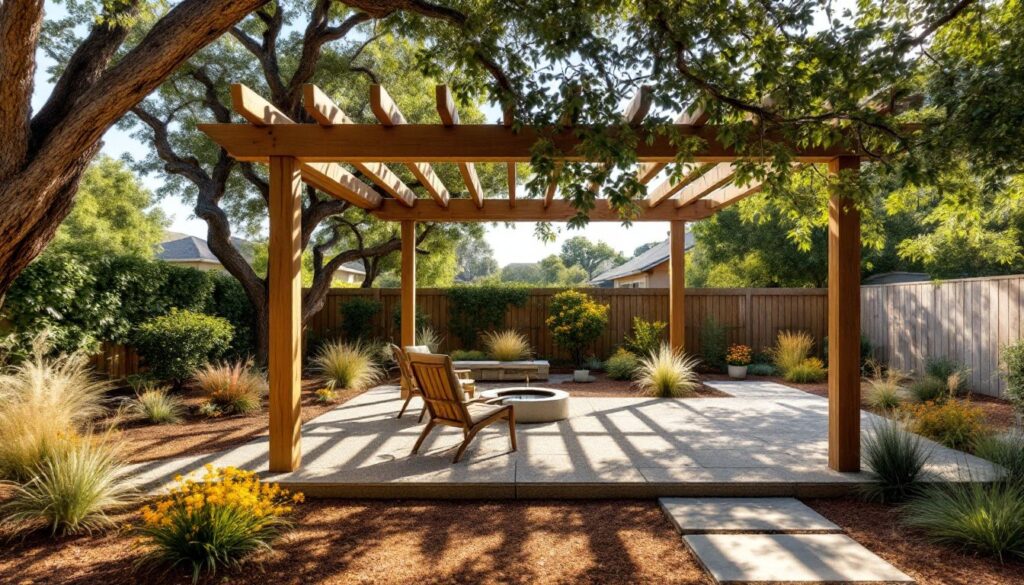
For immediate shade, build a pergola. A 12×16-foot pergola doesn’t block all sun, it creates dappled shade that feels 5–10 degrees cooler than direct exposure. Use pressure-treated 2×8 lumber for beams, 2×6 for rafters, and space them 18–24 inches apart. Post footings must sit below frost line. Bolt the structure securely: Texas wind can be fierce. Vining plants like Texas grape or cross vine trained over the pergola increase shade density over time.
Shade cloth (30–50% density) is a quick fix for temporary shading of patios or play areas. Install it 12–18 inches above seating to allow airflow and reduce radiative heat. For storage or pool areas, 75% shade cloth works. White or light-colored cloth reflects more heat than black.
Retractable awnings are pricier but durable, most quality models last 10+ years in Texas sun. They’re ideal for covered porches or deck extensions where permanent structure isn’t feasible.
Conclusion
Building a Texas backyard that’s beautiful and resilient comes down to respecting the climate, prioritizing water efficiency, and designing for actual use. Start with one project, native plants and mulch, a small patio, or a single shade structure. Results compound: trees mature, plantings knit together, and the landscape becomes easier to maintain each year. The best backyard landscaping ideas for Texas aren’t trendy: they’re practical solutions that work with heat, clay, and seasonal rainfall. Your future self, and your water bill, will thank you.