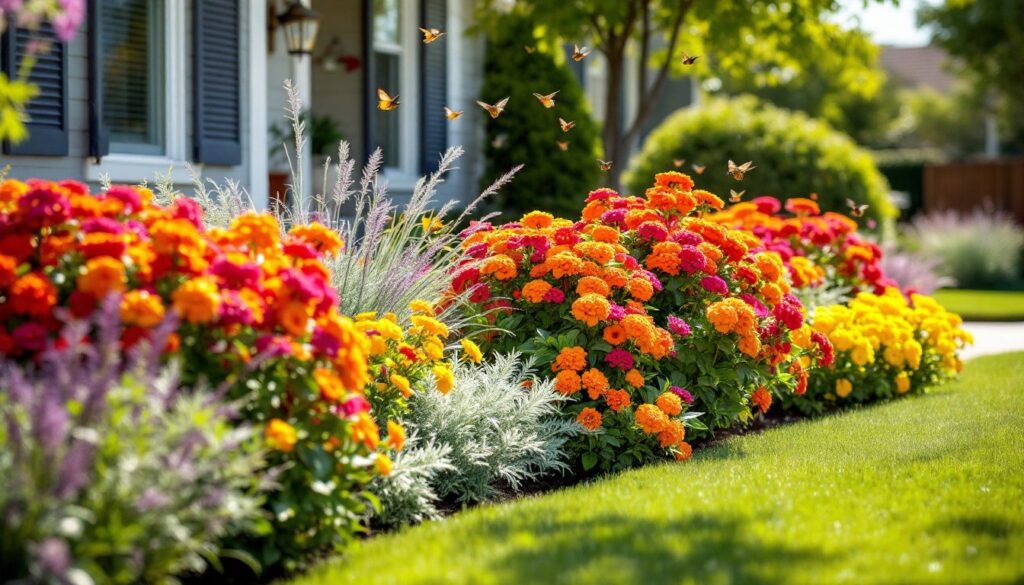
Lantana is one of the toughest, most rewarding plants a homeowner can add to the front yard. These clustered, colorful blooms attract butterflies and hummingbirds while tolerating heat, drought, and poor soil, conditions that kill most other ornamentals. Whether you’re working with full sun, sandy soil, or a tight maintenance schedule, lantana landscaping ideas can transform a dull entryway into a vibrant, thriving garden. Unlike delicate shade-loving perennials, lantana doesn’t demand perfect conditions or constant babysitting. It thrives where other plants fail, making it ideal for front yard displays that look polished without requiring a contractor’s attention. Let’s explore practical ways to use lantana to create eye-catching curb appeal.
Key Takeaways
- Front yard lantana landscaping ideas deliver four to six months of continuous color while requiring minimal water, maintenance, and fertilizer once established.
- Lantana thrives in full sun, poor soil, and heat—conditions that kill most ornamentals—making it ideal for drought-prone or neglected front yards.
- Bold single-color lantana focal points create contemporary impact, while mixed-color borders in groups of three to five plants offer warmth and tropical appeal without visual chaos.
- Arrange lantana 18–36 inches from your foundation and space plants 3 feet apart in linear rows or rounded masses to maximize curb appeal and prevent moisture issues.
- Pair lantana with drought-tolerant companions like ornamental grasses, salvia, and coreopsis rather than thirsty plants like hydrangeas to simplify watering and maintenance.
- Deadhead faded flowers every two weeks and prune lantana by one-third to one-half in late winter to promote bushier growth and prevent excessive self-seeding.
Why Lantana Is Perfect for Front Yard Landscapes
Lantana (Lantana camara and related species) delivers what most ornamental shrubs can’t: genuine durability paired with long-season color. The plant produces dense clusters of tiny flowers that bloom continuously from late spring through the first hard frost, giving you four to six months of color in most climates. It tolerates USDA zones 7 through 11, though behavior varies by region, in cooler zones it may die back to the roots in winter, while in warmer climates it stays semi-evergreen.
From a practical standpoint, lantana is nearly bulletproof. It handles full sun better than most plants, actually flowering more prolifically in hot, intense light. The shrub adapts to sandy, clay, or nutrient-poor soils where hydrangeas and other fussy perennials would struggle. Once established (about two weeks after planting), it needs minimal supplemental water even in drought conditions, a major advantage for front yards where curb appeal matters but water bills can’t run away.
The flowers attract pollinators aggressively. Butterflies, bees, and hummingbirds visit lantana constantly, adding movement and life to your front entry. For homeowners tired of boring foundation plantings, this combination of toughness, color, and wildlife appeal makes lantana a smart upgrade. It’s also deer-resistant, which matters in many suburban areas. The downside: some lantana varieties can self-seed aggressively in mild climates, so deadheading faded flower clusters keeps things tidy and prevents unwanted volunteers.
Color Combinations That Pop: Designing Eye-Catching Lantana Displays
Lantana comes in a range of colors, reds, oranges, pinks, yellows, whites, and bicolors, each suited to different design goals. The right color choice can anchor your entire front yard aesthetic.
Single-Color Focal Points
Choosing one lantana color and massing it creates a bold statement. A row of red lantana (varieties like ‘Bud Johnson’) along a front pathway or foundation draws the eye immediately and pairs well with modern, clean-lined homes. Golden yellow (try ‘Radiation’ or ‘Irene’) works beautifully with cottage or traditional architecture and brightens shady corners of the front yard by contrast. White lantana offers sophistication and makes a subtle statement: it works especially well if your home has a neutral or monochromatic exterior.
Single-color masses are easier to maintain visually because they don’t compete for attention. They also simplify shopping, you can buy five or seven of the same cultivar and space them evenly rather than juggling multiple varieties.
Multi-Hued Mixed Borders
Mixing complementary lantana colors creates depth and interest without chaos. A pairing of orange and red lantana, for example, creates a warm, cohesive gradient. Pink and white combinations feel softer and work well in front yards with lighter house colors. Yellow and red lantana, especially the ‘Dynamite’ and ‘Camara Mix’ cultivars, deliver that classic lantana vibe, warm, tropical, and lively.
When mixing colors, plant in groups of three or five rather than scattering singles. This creates visual weight and makes color blocks readable from the street. Position taller varieties (usually 4 to 6 feet) toward the back or center, and cascade shorter, mounding types (18 to 24 inches) toward the front or edges.
Planting Patterns and Layout Ideas for Maximum Impact
How you arrange lantana shapes how people perceive your front yard. Linear arrangements, a row running along a fence or walkway, create a clean, contemporary feel and define edges. A 3-foot spacing between plants allows for mature spread while keeping the arrangement tight enough to feel intentional rather than scattered. Rounded masses (planting five or seven lantanas in a broad circle or mound) suit cottage or relaxed styles and work well around mailboxes or focal points like a large rock.
For foundation plantings, position lantana toward the outer edge of the bed, not directly against the house. Most lantana varieties reach 3 to 5 feet tall and wide, and ramming them tight against siding invites moisture retention, pest issues, and visual clutter. Set them 18 to 36 inches from the foundation depending on variety size and your house’s architectural scale.
If your front yard has slopes, terraced beds, or elevation changes, lantana’s drought tolerance and sturdy root system make it ideal for hillside planting. Arrange plants perpendicular to the slope (not straight up and down) to slow water runoff and reduce soil erosion. In hot, exposed corners of the yard, south- or west-facing spots where heat radiates off pavement, lantana thrives where other ornamentals wilt. Place it prominently in these “hot zones” to turn liabilities into assets.
Consider sight lines and driveway views. If a lantana planting is visible from the driveway as you approach, position the tallest varieties where they won’t block the house number or create visual noise that competes with your entryway. A small, pruned lantana topiary or dwarf variety near the mailbox or entrance creates a welcoming focal point without overshadowing the door.
Companion Plants That Work Well With Lantana
Lantana pairs beautifully with plants that share its love of sun and drought tolerance, creating cohesive front-yard beds. Ornamental grasses like purple fountain grass or blue fescue provide textural contrast, their airy, fine foliage balances lantana’s dense clusters. Grasses also reduce maintenance because they don’t require regular deadheading like some perennials.
Salvia, especially tall varieties like ‘May Night’ or Texas sage, echoes lantana’s upright habit and flower-spike appeal while offering complementary colors. Coreopsis (tickseed) and rudbeckia (black-eyed Susan) bloom at similar times and share lantana’s ease and color range. Esperanza (Tecoma stans) and desert marigold add textural variety and thriving-in-heat credentials.
For softer edges, dusty miller or lamb’s ear provide silver-toned foliage that frames lantana clusters and adds visual breathing room. Lantana’s low-water needs mean pairing it with thirsty plants (like hydrangeas or hostas) creates management headaches, they’ll need supplemental irrigation your lantana doesn’t. Stick with drought-tolerant, full-sun companions and your whole bed thrives on a consistent watering schedule (or none, once established).
Avoid overstuffing. A bed with lantana, ornamental grass, salvia, and coreopsis can feel busy. Fewer plants, better spaced, reads cleaner and is easier to maintain. Leave breathing room, your eye will thank you, and your plants won’t compete for water and nutrients.
Low-Maintenance Care Tips for Thriving Front Yard Lantana
Once lantana is planted and established (about two to four weeks), maintenance is minimal. Water deeply but infrequently during the first season, this encourages deep root growth that makes the plant drought-tolerant. Mature lantana rarely needs supplemental watering except during extreme heat or drought lasting more than three weeks.
Deadheading, removing spent flower clusters, extends bloom and keeps plants tidy. Pinch off faded clusters every two weeks during the growing season. This isn’t essential (lantana blooms profusely even if you skip it), but it prevents excessive self-seeding in warm climates and keeps the plant looking polished.
Pruning in late winter or early spring (as new growth emerges) keeps lantana compact and full. Cut back by one-third to one-half of the plant’s height: it rebounds quickly with bushier growth. In zones where lantana dies back to the roots, wait until you see new growth before pruning, frost can fool you, and cutting into dead wood is wasted effort. In evergreen zones (8 and warmer), late February or March pruning prevents a lanky, overgrown appearance.
Fertilizer is optional. Lantana doesn’t demand feeding, especially in decent soil. If growth is slow, a balanced, slow-release granular fertilizer applied in spring helps, but overfertilizing encourages leafy growth at the expense of flowers. Skip the fancy supplements, lantana’s best at low-input gardening.
Watch for spider mites in hot, dry conditions, they cause stippling on leaves. A strong spray of water from the hose usually solves the problem. Whiteflies occasionally visit but rarely cause serious damage. Lantana’s toughness means pest and disease issues are rare compared to fussier ornamentals. In front yards where you want color without constant fussing, this is exactly what you want.