Whole house air duct cleaning costs can range from $300 to over $2,000, but most homeowners spend between $500 and $1,200 for a complete system. If you’re considering a house duct cleaning or wondering about the whole house duct cleaning cost for your specific home, the actual price depends on several key factors, system size, accessibility, and regional labor rates all play a role. Unlike one-time fixes, this is an investment in your indoor air quality, HVAC efficiency, and potentially your energy bills. This guide breaks down what you’ll actually pay, what drives those costs up or down, and whether the expense makes sense for your home.
Key Takeaways
- Most homeowners spend between $500 and $1,200 for whole house duct cleaning, though costs can range from $300 to over $2,000 depending on system size, accessibility, and regional labor rates.
- Home size and ductwork length are the strongest cost predictors—larger homes with 500+ linear feet of ductwork typically cost more than compact systems, with differences adding $200–$400 to the final bill.
- Professional air duct cleaning is recommended only when visible dust, mold, allergies, or recent construction issues are present—the EPA does not recommend routine annual cleaning for most homes.
- Get multiple quotes and compare exact scope of work, as contractor estimates can vary by $300–$500 for the same job, and bundling with HVAC maintenance can offer 10–15% discounts.
- Avoid upfront pressure for unnecessary add-ons like UV lights and antimicrobial coatings, and never use DIY kits or vacuum-only services, which lack the truck-mounted equipment needed for effective whole house air duct cleaning.
Average Pricing for Whole House Air Duct Cleaning
Most professional whole house duct cleaning jobs run between $500 and $1,200 nationally, though outliers exist in both directions. A typical single-story home with 1,500–2,000 square feet and a moderately complex ductwork layout falls into the $600–$900 range. Multi-story homes, especially those over 3,000 square feet, often hit $1,000–$1,500 or more because of additional ductwork and labor time.
The house duct cleaning cost varies significantly by region. Urban areas and regions with higher labor rates (Northeast, West Coast) tend to run 15–25% above the national average. Rural areas may be cheaper in absolute terms but harder to book because fewer providers operate there. Always get at least two quotes before deciding, prices from different contractors can vary by $300–$500 for the same job.
Some companies quote by linear foot of ductwork (typically $0.50–$1.50 per foot), while others use a flat rate based on home size. Neither approach is inherently unfair: flat rates favor larger homes, per-foot pricing favors compact systems. Ask which method the contractor uses and request an itemized estimate that breaks out labor, equipment, and any upsells (sanitizing coatings, UV light installations, etc.).
Factors That Influence Your Final Cost
Home Size and Ductwork Length
Your home’s square footage is the strongest predictor of duct cleaning cost. Larger homes have longer ductwork runs, more branches, and more registers to clean. A 1,500-square-foot ranch-style home typically has 200–300 linear feet of ductwork: a 3,500-square-foot two-story can have 500–750 feet. That difference alone can add $200–$400 to your bill.
Openness matters too. Homes with extensive basement or crawlspace ducts are cheaper to access than those with ductwork running through walls or attic spaces. If most ducts are accessible from a basement, the technician can work faster and charge less. Conversely, if they must cut drywall or access ducts through confined attic spaces, labor time climbs.
System Complexity and Accessibility
Older homes with rigid metal ductwork and a simple layout cost less than modern homes with flexible fiberglass ducts, multiple zones, and electronic dampers. Zone-controlled systems require disconnecting and reconnecting dampers, adding an hour or more of labor.
Accessibility is critical. If the main trunk line is accessible near the furnace or air handler, work is straightforward. If flex ducts are buried in insulation, crammed into rim joists, or routed through walls, the technician must spend extra time carefully routing vacuum hoses and may not clean every section effectively. Sealing issues, poor insulation, or damaged ducts also affect the estimate, some contractors add reinforcement or sealing work, which increases cost.
System age and condition matter. Newer systems with sealed, insulated ducts cost the same to clean but are typically cleaner to begin with. Older systems, especially those never serviced, may harbor significant buildup, debris, dust, and sometimes mold, that requires longer contact time or additional passes, pushing the bill up.
When to Consider Professional Air Duct Cleaning
Not every home needs duct cleaning on a schedule. The EPA doesn’t recommend it as routine maintenance: instead, consider cleaning if you notice visible dust or debris around registers, experience unexplained allergies or respiratory issues, or see visible mold growth in or around the ducts. If your home has had recent construction, water damage, or pest infestation, cleaning is justified. Post-renovation cleanup, in particular, can save you from distributing drywall dust and insulation particles throughout the house for months.
If you’re buying an older home or one that’s been vacant, a pre-move inspection and potential cleaning can pay off. Musty smells, dusty air, or inefficient heating and cooling suggest ductwork that may benefit from attention.
Avoid contractors who push “duct cleaning as preventive maintenance” on a yearly or biennial schedule. That’s rarely necessary for most homes. A quality furnace filter and annual HVAC servicing, plus changing filters every 1–3 months depending on type, handles routine air quality in most cases. Be skeptical of high-pressure sales tactics or vague promises of “increased energy savings” from cleaning alone: the efficiency gains are usually modest unless ducts are severely clogged or undersized.
Money-Saving Tips and What to Avoid
Get multiple quotes and compare scope. A $400 estimate might only include the main trunk and primary branches: a $900 one might cover every register, sanitizing, and secondary lines. Ask exactly what’s included and what’s upsold separately.
If you’re due for HVAC maintenance anyway, bundle duct cleaning with a furnace inspection and tune-up. Many contractors offer combined discounts of 10–15%. You’ll also catch any efficiency issues or repairs your system needs.
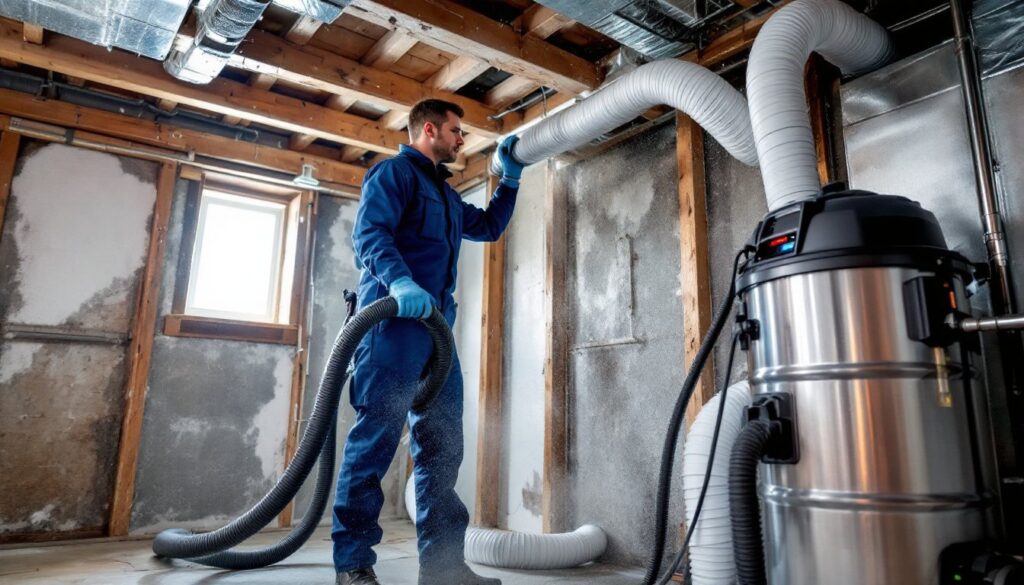
Avoid vacuum-only services or “DIY” duct cleaning kits. Whole-house duct cleaning requires truck-mounted negative pressure equipment, a portable shop vac doesn’t pull enough suction and can damage flexible ducts. Improper technique can dislodge debris further into the system or rupture fiberglass-lined ducts.
Skip extra upsells unless you have a specific reason: UV lights, antimicrobial coatings, and sealant products add $200–$500 but aren’t necessary for most homes. If you have mold concerns, address the root cause (moisture, humidity control, or duct insulation failure) rather than masking it with treatments.
Time your cleaning strategically. Off-season (late fall or early spring) rates may be lower than peak summer or winter when HVAC demand spikes. Some contractors offer seasonal discounts of 5–10%.
Don’t confuse house duct cleaning cost estimates without context. A $300 quote from a less-experienced provider or one using older equipment may deliver an incomplete job. Verify licensing, insurance, and customer reviews. A well-executed $700 cleaning beats a bargain-basement $300 one if you’re left with dirty air months later.
Conclusion
Whole house duct cleaning cost in 2026 reflects labor rates, system size, and regional variation. Budget $500–$1,200 for a thorough job, but get quotes tailored to your home. Clean ducts improve air quality and HVAC efficiency, but they’re not yearly necessities for most homes. When you do invest, choose a licensed contractor with proper equipment, verify the scope of work, and avoid pressure to buy unnecessary add-ons. Your system, and your wallet, will thank you.