Starting a house cleaning business doesn’t require fancy credentials or massive capital, just reliable service and solid business sense. Whether someone is leaving corporate life or launching their first venture, the cleaning industry offers low barriers to entry and steady demand. In 2026, homeowners are busier than ever, and many outsource cleaning to focus on what matters to them. This guide breaks down the practical steps to turn cleaning expertise into a profitable business, from nailing the market fit to landing consistent clients and building systems that let the operation scale.
Key Takeaways
- A house cleaning business requires minimal startup capital and thrives with reliable service, making it an accessible venture for new entrepreneurs entering the industry in 2026.
- Specialize your niche—such as eco-friendly cleaning, post-construction, or Airbnb turnovers—to stand out, justify premium pricing, and reduce competition in the house cleaning market.
- Establish an LLC structure with general liability insurance ($300–$600 annually) to protect your house cleaning business from lawsuits and meet client requirements for coverage.
- Price strategically by researching local competitors and offering tiered services (standard, deep clean, specialty) with monthly retainers to generate predictable recurring revenue.
- Build visibility through a free Google Business Profile, word-of-mouth referrals ($25–$50 bonuses), and consistent social media posting to drive low-cost customer acquisition.
Assess Your Market And Identify Your Niche
Before launching, research the local cleaning landscape. Who are the existing competitors? What neighborhoods have the most owner-occupied homes or busy professionals? Are there underserved demographics, new parents, senior communities, or tech-heavy areas where dual-income households dominate?
Nailing a niche beats being generic. A business that specializes in post-construction cleaning, deep-cleaning homes before sale, or serving eco-conscious clients with green products stands out more than “we clean anything.” Specialization also justifies higher rates because it’s perceived as expertise, not commodity labor.
Spend a week or two asking potential customers why they hire cleaning services and what frustrates them about current providers. Gaps in reliability, poor customer service, or lack of pet-safe products are common complaints. One person might discover that office buildings in their area have no regular cleaning contractors, suddenly the niche appears. Another finds that Airbnb owners need rapid turnover cleans between guests. These insights shape everything that follows.
Check local demand using Google Trends, Facebook community groups, and local business forums. If searches for “eco-friendly house cleaning near me” are trending upward, there’s market momentum behind that angle.
Plan Your Business Structure And Legal Requirements
Choose Your Business Entity
The three common structures for a cleaning business are sole proprietorship, LLC, or S-corp. A sole proprietorship is simplest and cheapest to set up, no separate filings required, but it offers no liability protection if someone slips and falls at a client’s home. An LLC (Limited Liability Company) costs $50 to $500 depending on state and offers liability protection while keeping taxes straightforward. An S-corp makes sense only after the business is generating solid profit because of extra administrative overhead.
For most new cleaning businesses, an LLC is the sweet spot: reasonable cost, liability shield, and simpler taxes than a corporation.
Obtain Licenses And Insurance
Most states require a general business license: a few states require cleaning-specific licenses or contractor permits. Check with the secretary of state’s office in your area. Costs run from $25 to $300 annually.
General liability insurance is non-negotiable. If a client’s artwork gets damaged or someone claims injury during a cleaning, liability coverage protects the business from lawsuits. Expect to pay $300 to $600 per year for basic coverage. Some clients, especially property managers or real estate firms, won’t book without proof of insurance.
Consider workers’ compensation insurance if hiring employees. It’s mandatory in most states for any employee, even part-time. Cost varies by state and payroll size but budgets $1,000 to $2,000 annually as a baseline for small operations.
Gather quotes from three insurers (a broker like Progressive or a local agent) before committing. Rates drop as the operation grows and adds spotless safety records.
Set Up Equipment And Supplies
Resist the urge to buy the most expensive equipment on day one. A cleaning business needs the essentials first, then upgrades as revenue allows.
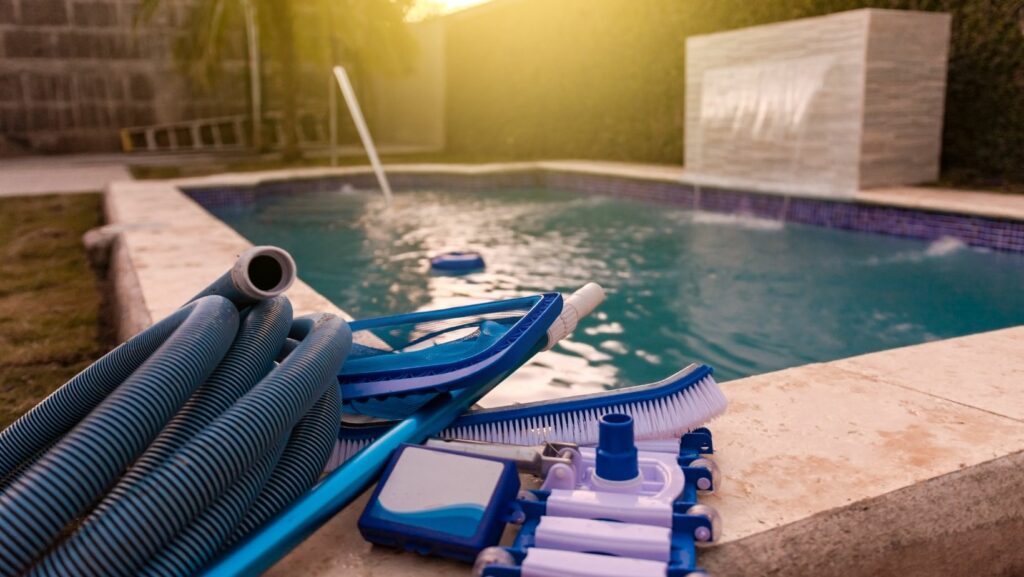
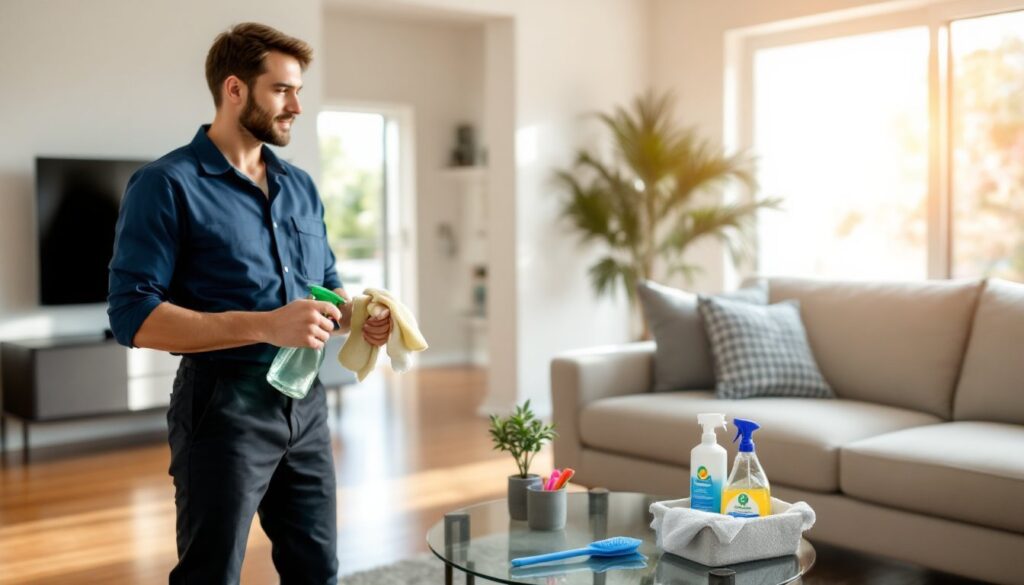
Core supplies include microfiber cloths, mops, squeegees, scrub brushes, vacuum cleaners, and chemical cleaners suitable for different surfaces. Invest in a HEPA-filter vacuum, around $150 to $300, because it traps fine dust and appeals to clients with allergies. A cordless backpack vacuum saves time on larger jobs.
Chemical inventory matters. Buy concentrated all-purpose cleaners, bathroom cleaners, glass cleaner, and floor stripper in bulk from a distributor like Sysco or local janitorial supply. Buying small retail bottles drains margins fast. A basic chemistry knowledge helps: never mix bleach and ammonia (toxic fumes), and always read safety data sheets (SDS) for each product.
For eco-conscious niches, stock plant-based or vinegar-based products. Mrs. Meyer’s Clean Day and Seventh Generation are popular mid-market options that clients recognize and appreciate, though they cost more than generic brands.
A vehicle with enough space to hold a day’s worth of supplies is essential. A van or SUV works: most cleaning pros keep supplies organized in plastic bins on shelves to prevent spills during transit. Budget $100 to $200 monthly for fuel and maintenance.
Start modest and reinvest revenue into better tools and products. A second microfiber-mop system or a steam cleaner (useful for deep cleans and tile grout) can wait until the first 10 jobs are booked and paying.
Develop Your Pricing Strategy And Service Packages
Pricing depends on local economy, niche, and complexity. A basic cleaning service in a rural area might charge $100 to $150 per 2-hour job: the same service in a major metro runs $200 to $300. Research local competitors by calling them posing as a potential customer.
Offer three tiers: standard, deep clean, and specialty. Standard might be 2-hour visit covering all rooms, vacuuming, dusting, bathroom scrub, and kitchen cleanup, $150 to $200. Deep clean (quarterly or semi-annual) adds baseboards, inside appliances, and grout scrubbing, $250 to $400. Specialty services like post-construction, move-out cleans, or pressure washing command premium rates because they require skill and time.
Monthly retainer packages generate predictable revenue. A client pays a flat fee for twice-weekly or weekly visits, often at a small discount to standard per-visit rates. This locks in recurring income and reduces marketing costs because the customer stays loyal.
Quote jobs by square footage or time estimate, never gut-feel pricing. A 3,000-square-foot home with three bathrooms takes roughly 3 hours for a standard clean. Measure a few trial jobs, track time, and refine estimates. Underpricing to win a job trains the market to expect cheap rates and drowns profitability.
Build in buffer time for travel between clients (15 to 30 minutes) when scheduling. A packed day of four 2-hour jobs with no break time creates burnout and poor quality.
Build A Strong Marketing Foundation
A one-person cleaning business with no online presence gets zero leads. Invest time, not just money, in visibility.
Google Business Profile (free) is essential. Claim the business listing, add photos of cleaned spaces (with client permission), post service hours, and ask satisfied clients to leave reviews. Positive reviews build trust and boost local search rankings. Aim for 15 to 20 reviews in the first three months.
Word-of-mouth referrals drive most cleaning businesses. Offer a $25 to $50 referral bonus to existing clients who bring a new customer. This costs less than paid ads and brings in pre-sold clients because friends trust each other’s recommendations.
Social media doesn’t require perfection. Post before-and-after photos on Instagram or Facebook (with client consent). Videos of a bathroom transformation take 30 seconds to film and highlight the business’s capability. Consistency matters more than polished production, post twice a week.
Local networking builds relationships. Join the chamber of commerce, attend neighborhood events, and introduce the business to real estate agents, property managers, and contractors. These professionals constantly refer work to reliable cleaning services.
A simple website (DIY platforms like Wix or Squarespace work fine) costs $10 to $20 monthly and includes service descriptions, pricing, contact form, and testimonials. Many potential clients expect a web presence: lacking one signals amateurism.
Track which marketing channels bring paying clients. If Google searches convert better than Instagram, double down on Google Business optimization. Avoid chasing trends that don’t deliver results.
Budget $50 to $100 monthly for marketing in year one. Most of the effort is sweat equity, writing posts, taking photos, reaching out personally, not paid ads.