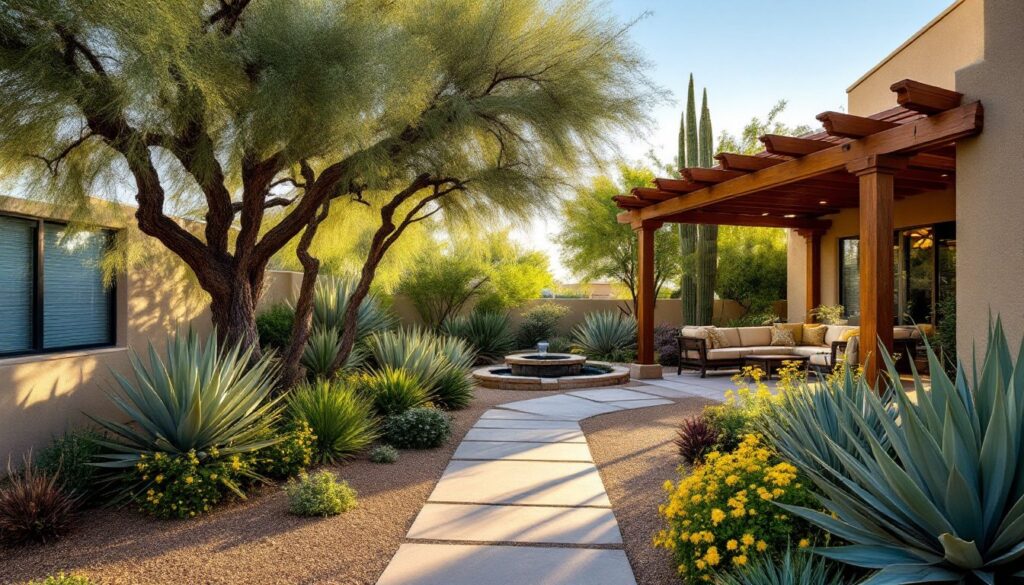
Arizona’s intense sun, low rainfall, and dramatic temperature swings present real landscaping challenges, but they’re not insurmountable. Homeowners who work with the desert climate rather than against it end up with yards that are easier to maintain, more water-efficient, and honestly, better looking year-round. This guide walks through the fundamentals of Arizona backyard landscaping: understanding what makes desert conditions unique, selecting plants built for heat and drought, installing irrigation that doesn’t waste water, and designing outdoor spaces that function during the summer months. Whether someone’s starting from bare dirt or reworking an existing yard, these principles apply across Phoenix, Tucson, Flagstaff, and anywhere else in the state.
Key Takeaways
- Successful Arizona backyard landscaping aligns with the desert climate by selecting native, drought-resistant plants like palo verde and mesquite that require minimal water after establishment.
- Drip irrigation systems reduce water waste by 50% or more compared to sprinklers, especially when timed for early morning hours to minimize evaporation.
- Replace traditional grass and mulch with low-water ground covers, sedums, and succulents that thrive in alkaline, compacted Arizona soil.
- Shade structures (pergolas, shade cloth, and strategically planted trees) are essential for creating usable outdoor living spaces and can reduce home cooling costs by 25–30%.
- Use hardscaping like decomposed granite and light-colored pavers to define pathways and reflect heat, avoiding materials like dark mulch and wood decking that absorb Arizona’s intense sun.
- Arizona backyard landscaping success depends on understanding local soil conditions, unpredictable rainfall patterns, and temperature extremes rather than trying to recreate landscapes from other regions.
Understanding Arizona’s Unique Desert Climate
Arizona doesn’t have one climate, it has several. Phoenix and Tucson sit in the low desert with summer highs often exceeding 110°F, while Flagstaff and higher elevations experience four true seasons. Humidity is low (typically 20–40% in summer), which means plants dry out fast even when soil has moisture. Rainfall is sparse and unpredictable: Phoenix averages 8 inches per year, most of it falling in summer monsoons and winter storms. Winter lows in the low desert can still drop below freezing at night.
Understood another way: Arizona soil tends to be alkaline (pH 7.5–8.5), compacted, and mineral-heavy. Many plants shipped from nurseries elsewhere struggle because they expect acidic, loose loam. Hard water used for irrigation can deposit salts in the soil over time, making it harder for plants to absorb water. The takeaway is practical: successful Arizona landscaping starts with accepting these conditions, then choosing materials and methods that fit them rather than trying to fight them.
Drought-Resistant Plants That Thrive in Arizona Yards
Native Trees and Shrubs
Native plants evolved in Arizona’s climate, so they need less water, fertilizer, and pest management once established. Palo verde (Parkinsonia aculeata) is a classic choice, it provides dappled shade, doesn’t drop a carpet of leaves, and tolerates heat and drought. Mesquite (Prosopis) works similarly and grows larger. Both develop deep root systems, so they don’t need supplemental water after two to three years of establishment. For smaller trees, desert marigold and Texas privet offer structure without excessive height.
For shrubs, creosote bush is an excellent hedge that needs minimal water once mature. Desert bloom (Baileya) blooms year-round in low desert zones. Texas privet and desert rose (Adenium) add color and architectural interest without requiring constant attention. All of these are widely available from Arizona nurseries because they’re proven performers.
Low-Water Ground Covers and Succulents
Instead of turf grass, which demands regular watering and fertilizer, ground covers and succulents handle the desert better. Desert marigold spreads nicely and flowers most of the year. Lantana tolerates intense heat, blooms freely, and attracts pollinators. For succulents, agave species are slow-growing, structurally striking, and incredibly tough, Agave parryi works well in the northern low desert and higher elevations.
Sedums (Sedum palmeri, Sedum nussbaeum) fill gaps, require almost no water once rooted, and are easy to propagate if a plant gets damaged. Aloe and echeveria are similarly hardy. A mixed planting of native ground covers and sedums replaces traditional mulch while actually improving the landscape’s resilience.
Water-Wise Irrigation and Hardscaping Solutions
Drip irrigation beats sprinklers in the desert. A drip system delivers water slowly at the soil surface, reducing evaporation and run-off. Spray heads waste 30–50% of water to wind and heat: drip systems cut that by half or more. Install drip on a timer set to early morning (4–6 AM) when evaporation is lowest. Even drought-tolerant plants need water during establishment (first one to two years), so drip lines make that job manageable.
Hardscaping, pavers, gravel, stone, is the landscaping secret Arizona homeowners overlook. Decomposed granite (DG) looks natural, costs less than bark mulch, and doesn’t decompose (so it won’t need replacing every year). Lay landscape fabric underneath to suppress weeds, then spread 2–3 inches of DG. For areas where foot traffic is heavy, pavers (porcelain, composite, or natural stone) handle heat better than wood decking, which can get too hot to walk on barefoot in July.
A common misconception: rocks and gravel don’t keep soil cool. They actually absorb and radiate heat. Shade cloth or larger trees overhead do more to moderate soil temperature. Use hardscaping to define pathways and seating areas, then fill planted zones with ground covers or smaller shrubs that provide their own microclimate.
Designing Outdoor Living Spaces for Arizona Heat
Arizona yards are useless if residents can’t spend time in them without burning up. Shade is the priority. Shade structures (pergolas, pavillions, or simple cloth shade cloth mounted on a frame) turn a backyard from uninhabitable to functional. A properly oriented pergola on the west or southwest side blocks afternoon sun while allowing morning light. Slatted designs work better than solid roofs because they allow air circulation.
Tree placement matters enormously. A large native tree (palo verde, mesquite) planted on the southwest corner of a house can reduce cooling costs by 25–30% if positioned correctly. Plant it now, even though it takes years to mature, the payoff is long-term.
For seating, choose weatherproof furniture that doesn’t absorb heat. Metal and stone heat up: cushioned outdoor furniture with UV-resistant fabric stays more comfortable. If installing a patio or pool, light-colored surfaces (pale pavers, light-colored concrete) reflect heat better than dark surfaces.
Water features, a small fountain, a shallow pool, or even a misting station, can drop local temperature by 3–5°F and add appeal. Keep them modest in size to avoid excessive evaporation. Finally, plan sightlines to neighboring yards or street views: strategic plantings of tall shrubs or small trees create privacy without requiring fences that block breezes.
Conclusion
Arizona backyard landscaping succeeds when homeowners align with the climate instead of fighting it. Native plants, drip irrigation, smart hardscaping, and thoughtful shade structures create outdoor spaces that are durable, low-maintenance, and actually pleasant to use. The best landscapes in Arizona don’t look like Southern California or the Pacific Northwest, they look like Arizona: bold, minimal, and resilient. Start with understanding local soil and water patterns, choose plants proven to thrive in the region, and build shade and comfort into the design. A well-planned desert yard becomes an extension of the home that works nine months of the year and anchors the property’s value for decades.