The typical cleaning cabinet overflows with half-empty bottles of specialized sprays, surface waxes, and scent diffusers that promise miracles but often underdeliver. Naked house cleaning strips away the marketing hype and excess, relying instead on a lean toolkit of proven, multipurpose solutions. This minimalist approach isn’t just gentler on the wallet and environment, it’s also more efficient. By ditching single-purpose products and complex routines, homeowners can maintain a spotless home with less clutter, fewer chemicals, and surprisingly less time spent scrubbing. For those tired of product overload, naked cleaning offers a refreshing reset.
Key Takeaways
- Naked house cleaning uses just four multipurpose essentials—white vinegar, baking soda, castile soap, and water—to replace dozens of specialized products and reduce costs by up to 90%.
- The minimalist cleaning movement eliminates harsh chemical fumes, making your home safer for children and pets while reducing decision fatigue and environmental impact.
- Microfiber cloths, squeegees, and quality basics outperform expensive specialty tools, saving money while delivering superior cleaning results.
- Naked cleaning follows a logical top-to-bottom sequence to avoid rework: declutter, dust high surfaces, wipe vertical surfaces, tackle counters, scrub stubborn spots, then mop floors last.
- Kitchen and bathroom success with naked cleaning requires room-specific techniques, such as avoiding vinegar on natural stone and using baking soda paste for grout and soap scum.
What Is Naked House Cleaning?
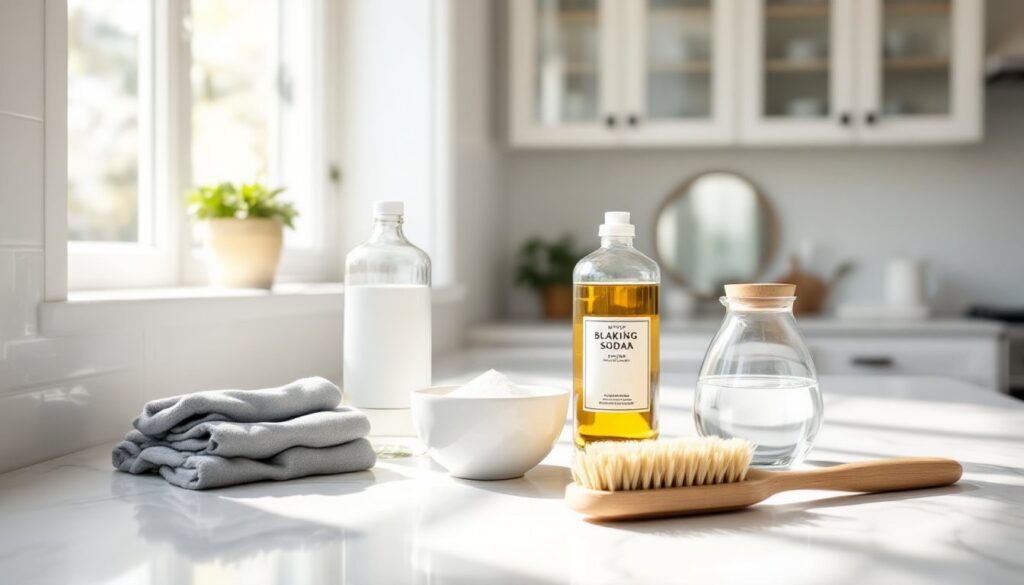
Naked house cleaning is a minimalist cleaning philosophy that relies on a small set of all-purpose, multipurpose products instead of buying specialized cleaners for every surface. The core idea: white vinegar, baking soda, castile soap, and water handle nearly every cleaning task in the home. No fancy scents, no dyes, no complicated blends. This approach echoes old-school housekeeping methods that worked for generations before marketing convinced consumers they needed fifty different products.
The “naked” part means stripping cleaning down to essentials, using what actually works rather than chasing trends. It’s not about being green for the aesthetic: it’s about practicality. A bottle of vinegar costs cents per use, cuts through soap scum and mineral deposits, and doesn’t require special storage or disposal. The same goes for baking soda: it deodorizes, mildly abrades without scratching, and neutralizes odors. Most naked cleaners add castile soap for scrubbing power and water as the universal solvent. That’s the foundation.
Why The Minimalist Cleaning Movement Is Gaining Traction
Homeowners are catching on that fewer products mean less time spent managing inventory, fewer toxic fumes indoors, and lower monthly spending. The minimalist cleaning movement also appeals to those avoiding harsh chemical fumes around children and pets. Commercial cleaners with ammonia, bleach, or quaternary ammonium compounds can irritate respiratory systems and require careful ventilation, not ideal in the middle of winter. Natural-based approaches eliminate that risk without sacrificing scrubbing power.
From a practical standpoint, naked cleaning reduces decision fatigue. Faced with two bottles of the same product from different brands, with marketing claims none of it can prove, many homeowners prefer the simplicity of reaching for vinegar and baking soda. It’s also cheaper: a gallon of white vinegar and a box of baking soda cost under five dollars combined and last months. A cabinet full of specialty cleaners adds up faster, especially when they sit unused. Beyond economics, the environmental footprint shrinks, fewer plastic bottles, reduced chemical runoff, and less waste overall appeal to cost-conscious and eco-minded DIYers alike.
Essential Tools and Supplies for Naked Cleaning
You don’t need an arsenal of tools, just reliable workhorses. Here’s what works:
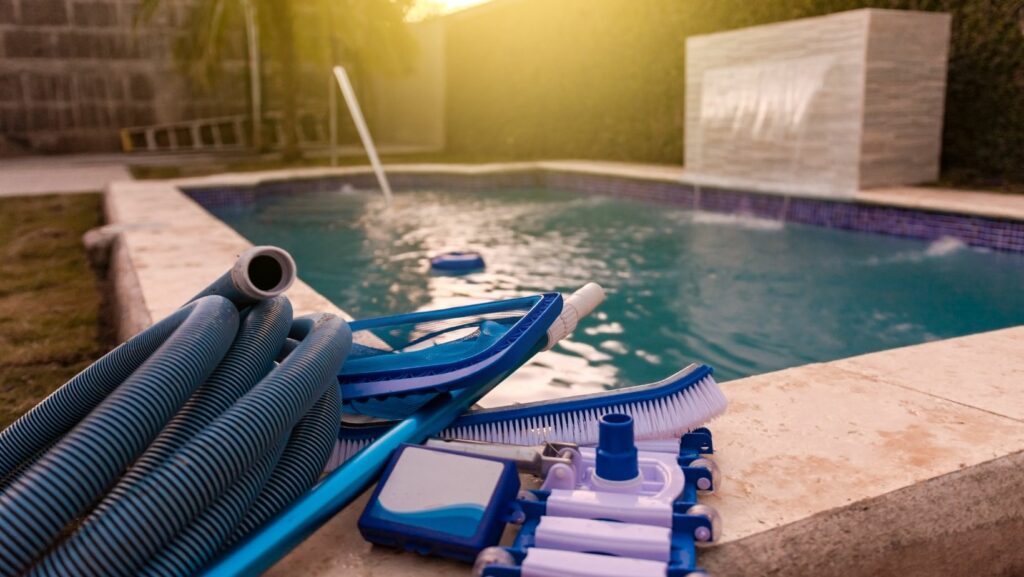
Microfiber cloths outperform paper towels for almost every task, they trap dust, lift oil, and require less product to get results. Grab a dozen and rotate them through the wash. Sponges and scrub brushes come in handy for textured surfaces like grout and tile: a stiff natural-bristle brush handles tough spots without gouging. A spray bottle lets you mix and apply solutions precisely. Squeegees and rubber gloves protect hands and speed up wet cleaning. A vacuum with a HEPA filter captures fine dust: a wet/dry shop vac handles spills and damp cleanup. Mop and bucket remain essential for floors.
For storage, a small tote or under-sink caddy keeps everything organized without sprawl. The key: quality basics beat quantity. Cheap microfiber degrades fast: mid-range cloths last years. A good squeegee prevents water streaks that cheap ones leave behind.
Natural Cleaning Agents That Work
White distilled vinegar (5% acidity) cuts through mineral deposits, soap scum, and grease. Use it straight on windows or diluted (one part vinegar to three parts water) on counters. Never mix vinegar with bleach, it creates toxic chlorine gas. Baking soda (sodium bicarbonate) is mildly abrasive and deodorizes without scratching surfaces. Sprinkle it on carpets, dissolve it in water for scrubbing, or combine with a little water to form a paste for stubborn stains. Castile soap (plant-based, not petroleum-derived) cuts grease and soap scum. A few drops in a spray bottle with water creates an effective all-purpose cleaner. Lemon juice adds mild acidity and natural fragrance: the citric acid helps break down deposits. Essential oils (optional) like tea tree or lavender add scent without chemicals, a few drops per bottle suffice. All four core agents are food-safe, non-toxic if ingested in small amounts, and safe around children and pets when used sensibly.
Step-by-Step Naked House Cleaning Guide
Efficient naked cleaning follows a logical sequence to avoid re-work. Start at the top of rooms and work down, dust falls, so you clean floors last. Work top to bottom within each room too.
- Declutter first. Remove items from surfaces so you can actually clean them. This step saves time and makes everything easier.
- Dust high surfaces. Use a dry microfiber cloth on shelves, ceiling corners, and light fixtures. Dust falls down, so don’t sweep floors yet.
- Wipe vertical surfaces. Spray vinegar and water (1:3 ratio) on walls, mirrors, and glass. Squeegee or wipe dry immediately to prevent streaks.
- Tackle counters and furniture. Use the all-purpose spray (castile soap, water, and a drop of vinegar). Wipe with a damp cloth, then dry.
- Scrub stubborn spots. For soap scum, mineral buildup, or stuck grime, apply a baking soda paste (baking soda plus a little water) and let it sit for 5–10 minutes. Scrub gently with a brush, then rinse.
- Mop floors last. Fill a bucket with warm water, add a few drops of castile soap, and mop. Change the water if it gets visibly soiled, dirty water just spreads grime around.
- Dry and air out. Cracking a window removes moisture and vinegar smell. Microfiber cloths dry surfaces streak-free in minutes.
Tackling Different Room Types Efficiently
Kitchens need grease-cutting power. Use straight vinegar or vinegar-and-water spray on stovetops, cooktops, and backsplashes. For baked-on spills, baking soda paste softens them: let it sit 10–15 minutes before scrubbing. Castile soap handles sink edges and counters well. Avoid vinegar on natural stone countertops (like marble or granite) because acidity can etch them, use plain water or a neutral pH cleaner instead.
Bathrooms benefit from the vinegar-and-baking-soda combo. Spray vinegar on mirrors and glass shower doors: squeegee immediately. For tile grout, apply a baking soda paste, let it sit 5–10 minutes, and scrub with a stiff brush. Soap scum on tub lips yields to the same treatment. Keep a spray bottle of vinegar-water in the shower to wipe down after each use, prevents buildup and cuts cleaning time weekly.
Living areas and bedrooms are simpler. Dust surfaces, wipe with a damp cloth using all-purpose spray, and vacuum. Microfiber captures most dust, so vacuuming once weekly usually suffices. For pet odors in upholstery, sprinkle baking soda, let it sit 30 minutes, and vacuum.
Floors vary by type. Hardwood benefits from dry-mopping first (microfiber cloths trap dust without moisture). When mopping, wring the mop very dry, excess water damages wood. Tile and vinyl handle more moisture: mop as usual. For grout lines, a damp baking soda paste and a grout brush works better than sprays.
Conclusion
Naked house cleaning proves that simplicity outweighs complexity when it comes to maintaining a clean, healthy home. By relying on a handful of inexpensive, multipurpose staples, vinegar, baking soda, castile soap, and water, homeowners cut costs, reduce chemical exposure, and free up cabinet space. The minimalist approach works because it focuses on what actually cleans rather than marketing promises. For those ready to ditch the product overload, naked cleaning is practical, effective, and refreshingly straightforward.