Most homeowners think pressure washing is the only way to get a truly clean house, but that assumption costs thousands in accidental damage every year. Soft washing, a low-pressure cleaning method that uses specialized chemical solutions instead of brute force, has become the smarter choice for protecting siding, roofs, and delicate surfaces while removing stubborn mold, algae, and stains. Unlike the 3000+ PSI jolt of a pressure washer, soft washing delivers results at just 500 PSI or less, relying on biodegradable cleaning agents to do the heavy lifting. Whether a homeowner is dealing with asphalt shingles, vinyl siding, or composite decking, soft wash house cleaning offers a safer, more effective alternative that won’t void warranties or leave behind streaks and permanent damage.
Key Takeaways
- Soft wash house cleaning uses low-pressure water (200–500 PSI) combined with chemical solutions to safely clean delicate surfaces like asphalt shingles, vinyl siding, and composite decking without causing damage or voiding warranties.
- Unlike pressure washing, soft washing kills mold, algae, and mildew spores at their source through chemistry, resulting in longer-lasting results that typically stay clean for 2–3 years instead of 1–2 years.
- The soft washing process requires proper safety equipment (gloves, eye protection, respiratory protection) and careful attention to dwell time and weather conditions for optimal effectiveness and safety.
- Soft washing offers significant advantages including surface preservation, reduced injury risk, environmental friendliness with biodegradable solutions, and superior results on stubborn stains that pressure washing cannot effectively remove.
- Small soft wash projects like patios and fences can be DIY-friendly with rental equipment, but roof and multi-story siding work should typically be handled by professionals due to safety and height concerns.
What Is Soft Washing and How Does It Differ From Pressure Washing?
Soft washing is a low-pressure cleaning technique that combines water at reduced PSI (pounds per square inch) with eco-friendly chemical solutions tailored to the job. Instead of relying on force to blast away dirt, soft washing lets chemistry do the work. A typical soft washing system operates between 200 and 500 PSI, whereas a pressure washer fires out water at 3000 to 4000 PSI or higher.
The key difference lies in what gets destroyed and what gets preserved. Pressure washing can strip paint, gouge wood, and shatter vinyl siding if mishandled. It can also force water behind shingles or siding, causing rot and mold inside walls. Soft washing, by contrast, is gentle enough to use on a hand (though nobody recommends that) yet potent enough to eliminate the organisms causing algae and mold growth at their source.
The chemical component is what makes soft washing work so well. Cleaners might include sodium hypochlorite (similar to household bleach), acid-based solutions for mineral deposits, or specialized enzyme-based treatments. These solutions actively kill mold spores, mildew, and algae instead of just displacing them. Once applied, the chemicals do the heavy lifting while water rinses away dead debris, no aggressive scrubbing or high pressure needed.
Best Surfaces for Soft Wash Cleaning
Roofs, Siding, and Delicate Materials
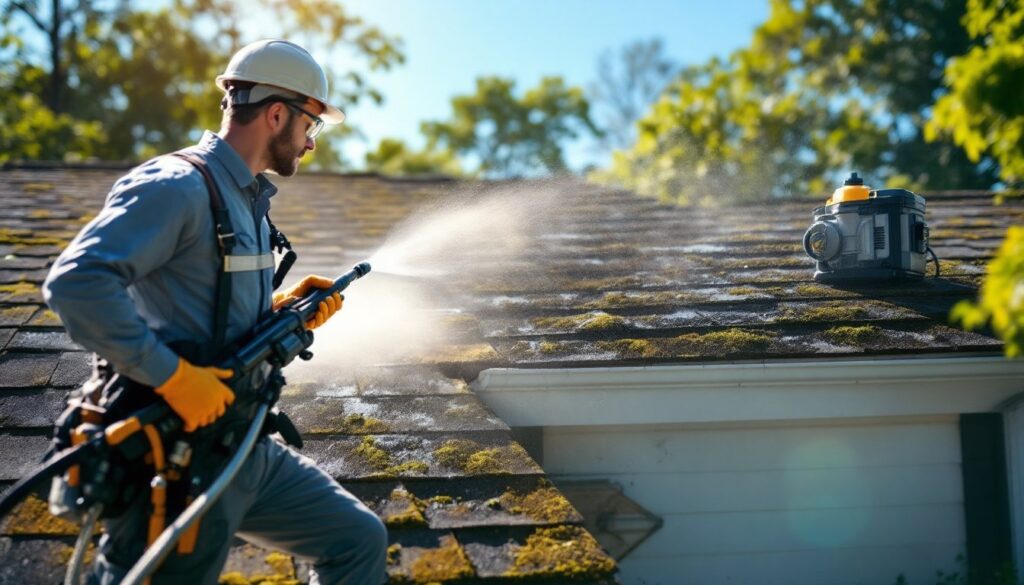
Soft washing excels on surfaces that pressure washing can damage. Asphalt shingle roofs are prime candidates, soft washing removes the black streaks (caused by algae and moss) without dislodging granules or voiding the manufacturer’s warranty. Most shingle makers explicitly warn against pressure washing, making soft washing the approved method.
Vinyl and composite siding benefit hugely from soft washing. Pressure washers can crack vinyl planks, split seams, and force water into walls. Soft washing leaves the surface intact while killing the mold and algae causing discoloration. Homeowners often see stubborn stains vanish within days as the chemical does its work.
Fiber cement siding, wood siding, and painted surfaces are safer with soft washing too. Even “resistant” wood can absorb pressure-washer damage. Soft wash solutions respect the finish while eliminating staining organisms.
Decks, fences, and patios also respond well, especially composite materials. Pressure washing can splinter wood, erode mortar in brick, and damage grout. Soft washing cleans effectively without the collateral harm. For porous stone (limestone, sandstone), soft washing prevents the erosion that pressure can cause.
One caveat: heavily oiled or caked-on debris (say, thick tree sap or roofing tar) sometimes requires pre-treatment or gentle agitation, but even then, soft washing keeps pressure far below danger levels.
The Soft Washing Process and Equipment Used
A basic soft washing setup includes a low-pressure pump, a chemical injector, and appropriately rated hose and nozzles. Unlike rented pressure washers (which most people recognize), soft wash equipment looks simpler, but don’t let that fool you.
The pump is the heart of the system. A diaphragm or centrifugal pump delivers water at the right flow rate and pressure. Many homeowners use a 12V pump powered by a battery or vehicle outlet: others opt for gas-powered equipment for larger jobs. The injector (usually proportioning or downstream) mixes the cleaning solution at the right ratio, typically between 0.5% and 2%, depending on the chemical and application.
Hose and nozzles matter too. Soft washing uses wider spray patterns (often 25 to 40 degrees) rather than the pinpoint jet of pressure washers. This distributes water and chemical evenly without concentrated impact.
The process itself is methodical. First, a homeowner or contractor assesses the surface and selects the appropriate chemical. For algae-stained roofs, a sodium hypochlorite mix works well: mineral deposits on siding might call for an acid-based solution. The chemical is loaded into a tank or hopper, the system is primed, and the nozzle is set to low pressure. The operator applies solution in overlapping passes, much like painting. Dwell time, how long the chemical sits on the surface, is crucial: it might be 10 to 30 minutes depending on the product. Finally, a rinse with clean water (still at low pressure) removes the dead organisms and spent chemical.
Safety equipment is non-negotiable: gloves, eye protection, and respiratory protection (particularly when using sodium hypochlorite, which can off-gas chlorine). Long sleeves and pants protect skin from chemical splash.
Benefits of Choosing Soft Washing Over Traditional Methods
The advantages of soft washing stack up quickly. First is surface preservation. Soft washing won’t strip paint, crack siding, or dislodge roofing granules. This alone saves thousands in repair costs and keeps warranties intact, a major advantage for newer homes or recently installed roofing.
Second is longevity of results. Because soft washing kills the organisms (algae, mold, mildew spores) rather than just blasting them away, regrowth is slower. Pressure-washed surfaces often re-stain within a year or two as spores settle and multiply again. Soft-washed surfaces typically stay clean for 2 to 3 years, sometimes longer.
Third is safety and liability. Pressure washers can cause injury: the stream packs enough force to lacerate skin. Soft washing, operating at much lower pressure, carries far less risk to the operator and bystanders. For commercial property managers or homeowners with insurance concerns, this is significant.
Fourth is environmental friendliness (when using the right chemistry). Most modern soft wash solutions are biodegradable and safe for landscaping, pets, and aquatic systems if applied per label directions. The chemical breaks down in sunlight and soil, unlike some industrial degreasers.
Fifth is efficiency on challenging stains. Black streaks on shingles, mineral deposits, rust stains, and even some organic growth respond better to chemical action than to pressure alone. A homeowner who’s tried pressure washing and failed often finds soft washing delivers what force couldn’t.
Common Concerns and Safety Considerations
Are soft wash chemicals harmful? Modern soft wash solutions, when used per label instructions, are generally safe for people, pets, and vegetation. Sodium hypochlorite is the same active ingredient in diluted household bleach. Acid-based products are more caustic and require careful handling and ventilation. Always read the label, follow mixing directions, and never combine chemicals (especially bleach and acids, that creates toxic chlorine gas).
Will soft washing harm my plants and landscaping? Used properly, no. Keep plants watered, shield tender foliage from direct spray, and rinse vegetation after treatment. Most soft wash cleaners break down safely in soil. But, overzealous application or runoff into a small pond or fish tank could cause harm, so manage the flow.
Can I do this myself? Yes, but there are caveats. Small projects (a patio or fence section) are accessible to a confident DIYer. Roof work requires working at height, wear a safety harness anchored properly and never work alone. Multi-story siding is easier to hire out unless you’re experienced with ladders. Rentals of soft wash gear are available, but make sure you understand chemical mixing and application rates before spraying.
Dwell time and weather matter. Don’t apply soft wash if rain is forecast within a few hours: the chemical needs time to work. Sunny conditions help, though dark stains sometimes vanish faster in cooler weather (slower evaporation = longer dwell). Temperature extremes (below 50°F or above 85°F) can reduce efficacy.
Avoid common mistakes. Mixing chemicals at the wrong ratio wastes product or creates ineffective solutions. Skipping the rinse leaves residue and can cause streaking. Applying too much solution wastes money and risks chemical buildup on surfaces.
Conclusion
Soft wash house cleaning is the responsible choice for most residential exterior surfaces. It removes stains, mold, and algae effectively while protecting siding, roofing, and landscaping from the collateral damage that pressure washers inflict. By combining low pressure with chemistry, homeowners achieve longer-lasting results, safer application, and preserved property value. Whether tackling a moldy roof or algae-stained siding, soft washing delivers the clean that lasts without the regret.