California’s water challenges aren’t going away, and many homeowners are rethinking their front yards. Gone are the days of thirsty lawns and high-maintenance perennials: the smart move now is designing a drought-resistant landscape that looks great year-round without constant upkeep. Front yard landscaping in California doesn’t mean sacrificing curb appeal, it means working with the climate instead of against it. Native plants, strategic hardscaping, and water-efficient design principles create stunning outdoor spaces that prove sustainability and style go hand in hand. Whether tackling a complete overhaul or gradual upgrades, these proven approaches help any homeowner build a beautiful, resilient front yard.
Key Takeaways
- Front yard landscaping in California should prioritize native plants like California poppies and sage that thrive with minimal water after establishment and reduce ongoing maintenance needs.
- Replacing traditional lawns with drought-resistant ground covers and hardscape features like decomposed granite or permeable pavers cuts water use dramatically while improving functionality.
- Smart irrigation systems with drip emitters and soil moisture sensors reduce water waste by 50% compared to sprinklers and should run early morning (4–7 AM) during the May-September growing season.
- Mediterranean and modern minimalist design styles align perfectly with California’s climate and drought conditions while maintaining strong visual appeal and curb appeal.
- Layering hardscape and native plants at varying heights, mulching with 2–3 inches of coarse material, and adding focal points like architectural elements create beautiful, resilient landscapes without constant upkeep.
Native Plant Landscaping for Low-Maintenance Beauty
Native plants are the foundation of any smart California front yard. Species like California poppies, sage, manzanita, and toyon evolved to thrive in local sun and soil with minimal water once established. Unlike ornamental imports that demand constant feeding and watering, natives handle heat, irregular rainfall, and poor soil naturally.
The practical advantage is straightforward: reduced watering, fewer pest problems, and no need for heavy fertilizer. Native plants also support local pollinators and wildlife, creating a small ecosystem rather than a monoculture. When selecting natives, match plants to your site’s actual conditions, full sun plants in shade will struggle just as much as shade lovers baked in afternoon heat.
Establishment matters. Plant in fall or early spring when soil moisture is higher, and water regularly for the first growing season (typically one year). After that, natives require minimal supplemental water in most California zones. Group plants by water needs so you’re not over-watering drought-tolerant species alongside thirsty ones. This approach cuts maintenance time and water bills without looking neglected.
Drought-Resistant Ground Covers and Hardscape Solutions
Replacing lawn with alternatives cuts water use dramatically. Drought-tolerant ground covers like creeping sage, California fuchsia, or silver carpet provide greenery and texture without the mowing and watering. For areas that take foot traffic, decomposed granite (DG), permeable pavers, or gravel offer clean, low-maintenance solutions.
Hardscape, patios, pathways, and mulched beds, serves multiple purposes. It reduces the planted area that needs water, creates visual structure, and makes the space more functional. A decomposed granite pathway costs less than pavers but needs occasional raking: permeable pavers cost more upfront but let water drain and look finished long-term.
Combining Hardscape and Native Plants
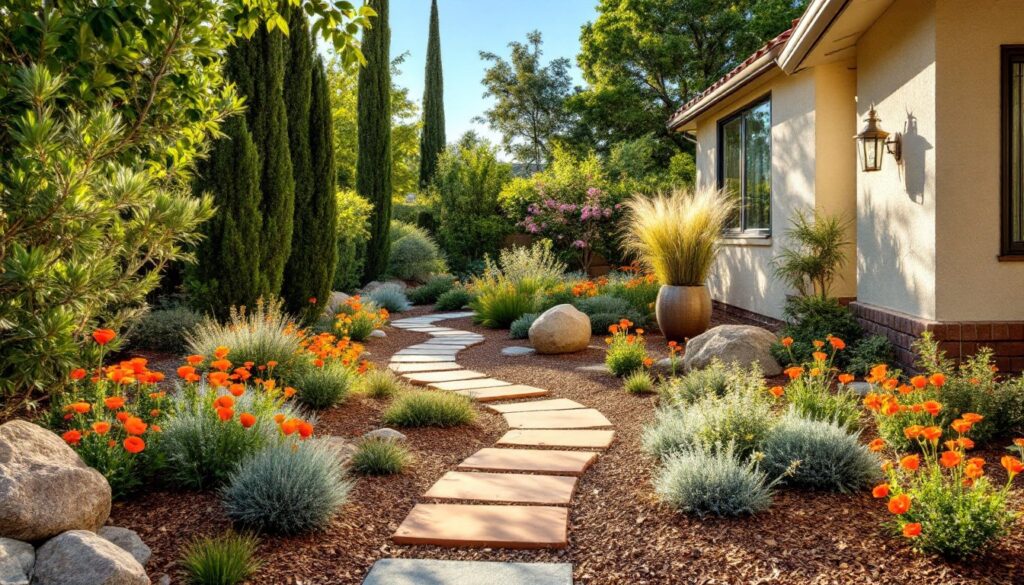
The magic happens when hardscape and plants work together. Use hardscape to define zones, a patio near the entry, a mulched planting bed in the center, gravel as a transition. Then layer natives at varying heights: tall shrubs in back, mid-level plants in the middle, and ground covers at the edges. This creates depth and visual interest while keeping watering zones consistent. Apply 2 to 3 inches of mulch around plants to retain soil moisture, suppress weeds, and regulate temperature. Use coarse mulch (wood chips, bark) rather than fine bark, which can compact and suffocate roots. Refresh mulch annually as it breaks down.
Water-Wise Features: Xeriscaping and Smart Irrigation
Xeriscaping, derived from the Greek word for dry, is landscaping designed to minimize water needs. The seven principles are: planning and design, soil improvement, practical turf areas, appropriate plant selection, efficient irrigation, use of mulches, and appropriate maintenance. For front yards, this typically means reducing or eliminating lawn, choosing drought-adapted plants, and installing smart irrigation.
If keeping some turf, transition to native grasses like blue fescue or Idaho fescue, which need less water than Kentucky bluegrass or perennial ryegrass common in other regions. Confine grass to areas that receive regular foot traffic.
Smart irrigation is non-negotiable in 2026. Drip irrigation delivers water directly to soil, reducing evaporation by 50% compared to sprinklers. Install soaker hoses or drip emitters on timers with soil moisture sensors. Modern controllers adjust watering based on rainfall and soil conditions, cutting unnecessary watering. Hardwire systems require trenching and an electrician: above-ground kits are cheaper and work well for smaller yards. Most California zones need supplemental water May through September: winter rains usually sustain established plants. Set timers to run early morning (4–7 AM) to minimize evaporation and fungal issues.
Mediterranean and Modern Design Styles for California Homes
California’s architecture and climate align naturally with two dominant styles: Mediterranean and modern minimalist. Mediterranean landscaping draws from coastal Spain, Italy, and Greece, dry, sun-baked regions where drought-resistant plants thrive. Think olive trees, rosemary, lavender, agapanthus, and ornamental grasses. These plants tolerate poor soil, intense sun, and irregular water. Stone or terracotta accents, gravel paths, and rustic containers complete the look. This style suits coastal and inland properties and works in both formal and casual settings.
Modern minimalist design strips plants and hardscape to essentials. Clean lines, limited plant palettes, sleek pavers, and architectural evergreens create calm, curated spaces. A single columnar juniper or Japanese black pine becomes a statement piece rather than part of a mixed bed. Mulch beds are tidy geometric shapes. This approach appeals to contemporary homes and works especially well where maintenance time is limited.
Adding Architectural Elements and Focal Points
Both styles benefit from focal points that draw the eye and break up empty space. A decorative boulder, sculpture, water feature, or pergola gives structure and visual interest without added watering. Vertical gardens on walls or trellises add greenery in tight spaces and create dramatic height. A simple wooden or steel arbor frames the entry and provides architecture. Even a well-placed bench or specimen container works. Hardscape focal points, a ring of pavers around a tree, a stacked stone wall, or raised beds, add texture and dimension. Choose materials that match your home’s exterior (siding, trim, stone) for cohesion.
Conclusion
Building a drought-proof California front yard doesn’t mean sacrificing beauty or settling for a sparse, uninviting space. By combining native plants, smart hardscaping, efficient irrigation, and a clear design vision, homeowners create landscapes that thrive locally while cutting water use, maintenance, and cost. Start with a plan, sketch zones, identify sun and shade, and list existing features to keep. Then build incrementally if a full overhaul feels overwhelming. Even a few native shrubs and a drip system installed today pays dividends over time.