When was the last time someone cleaned the inside of your home’s ductwork? For most homeowners, the answer is “never”, and that’s a costly oversight. House air duct cleaning is one of those maintenance tasks that sits just outside the DIY comfort zone, yet it directly impacts how well your HVAC system runs, how clean your indoor air is, and how much you’re spending on energy bills. Unlike the furnace filter you swap out twice a year, the miles of ductwork behind your walls and above your ceilings collect dust, debris, pet dander, and mold over time. This buildup doesn’t just waste energy: it can make your home feel stuffy, trigger allergies, and reduce your system’s lifespan. Here’s what homeowners need to know about whole house duct cleaning and when professional service makes sense.
Key Takeaways
- House air duct cleaning removes accumulated dust, debris, and mold from your HVAC system’s ductwork, directly improving indoor air quality and system efficiency.
- Visible dust around vents, reduced airflow, uneven room temperatures, and higher energy bills are clear signs your ducts need professional cleaning.
- Professional whole house duct cleaning typically costs $400–$1,200 and can deliver 5–15% energy savings plus extended equipment lifespan.
- The process uses specialized equipment like truck-mounted vacuums and rotating brushes to safely clear ducts without causing damage, taking 3–5 hours for a complete job.
- Most homes benefit from air duct cleaning every 3–7 years, or more frequently if you have pets, recent renovations, or live in a dusty area.
- Investing in professional duct cleaning prevents costly emergency repairs and reduces allergen circulation, especially benefiting people with asthma or dust sensitivities.
What Is House Air Duct Cleaning and Why It Matters
House air duct cleaning is the process of removing accumulated dust, debris, mold, and contaminants from the supply and return air ductwork throughout your home. Your HVAC system pulls conditioned air through a network of ducts, some visible in basements and crawlspaces, most hidden in walls, attics, and cavities, then distributes it room by room. Over months and years, those ducts become repositories for dust, drywall particles (especially after construction), pet hair, insulation fibers, and outdoor pollutants drawn in through air leaks.
Why does this matter? A clogged or contaminated duct system forces your furnace and air conditioner to work harder to move air through the restrictions. That means higher energy bills and reduced comfort. More importantly, every breath your family takes pulls air from those ducts. If they’re dirty, your indoor air quality suffers, particularly for people with allergies, asthma, or respiratory sensitivity. Whole house duct cleaning addresses the entire ductwork network, not just a few accessible sections, ensuring consistent air quality and system efficiency throughout your home.
It’s worth noting that duct cleaning isn’t a DIY project. The job requires specialized equipment (high-powered vacuum systems, rotating brushes, and air whips), access to confined spaces, and knowledge of how to avoid disturbing asbestos-containing insulation in older homes. A thorough cleaning typically takes 3–5 hours and costs between $400 and $1,200 depending on home size, duct configuration, and contamination level.
Signs Your Air Ducts Need Professional Cleaning
Not every home needs duct cleaning on the same schedule. The EPA recommends professional inspection and cleaning when you notice specific warning signs or after major events like renovation, fire, or water damage. Learning to spot these indicators helps you decide whether it’s time to call in a pro.
Visible Dust and Debris Around Vents
One of the clearest signs is dust building up on your supply vents and return air grilles faster than usual. If you notice a visible film or dust buildup within days or weeks of wiping them clean, your ducts are likely shedding. Similarly, when you remove a return air vent cover and shine a flashlight inside, you should see relatively clean ductwork. If there’s visible dust, lint, or debris clinging to the inner walls, that’s a red flag. Some homeowners spot debris falling from vents when the system kicks on, another indicator that ac duct maintenance is overdue. This isn’t just cosmetic: it means contaminants are circulating through your living spaces.
Reduced Airflow and HVAC Efficiency
If certain rooms feel noticeably warmer or cooler than others even though the thermostat setting, blockages in the duct network may be the culprit. You might also notice that your system runs longer to reach the set temperature, or your utility bills climb without obvious explanation. When ducts are clogged, the blower motor strains to push conditioned air through, increasing runtime and energy consumption. Some homeowners describe it as rooms feeling “stuffy” even when the AC or heat is on. Also, if your furnace or air handler has never been professionally serviced since you moved in, or after a major renovation, the ducts likely need attention. Dust and debris can also accumulate in the return air plenum (the chamber pulling air back to the unit), restricting airflow at the source.
Benefits of Professional Air Duct Cleaning
Investing in whole house duct cleaning delivers tangible benefits that go beyond what a clean furnace filter can achieve. First, you’ll likely notice improved airflow and more even heating and cooling throughout your home. Rooms that felt stuffy or didn’t reach temperature as quickly become more responsive once the ducts are clear. Many homeowners report feeling the difference within a day or two, better air circulation and faster system response.
Second, indoor air quality improves noticeably. If anyone in your household suffers from allergies, asthma, or dust sensitivity, removing pounds of accumulated debris from your ductwork can provide real relief. You’ll spend less time dusting surfaces and notice fewer respiratory symptoms, especially during high-pollen seasons or when the heat or AC runs heavily.
Third, a clean duct system reduces the workload on your HVAC equipment. When your furnace and air conditioner don’t have to fight resistance, they run more efficiently, shorter cycles, and with less strain on the blower motor and compressor. That translates to lower energy bills, often 5 to 15 percent savings depending on how contaminated the ducts were, and extended equipment lifespan. You’re also less likely to need emergency repairs or premature replacement.
Finally, professional cleaning gives you peace of mind and a documented baseline. Reputable services provide before-and-after photos, a report of what was found, and recommendations for preventive care. This documentation is valuable if you sell your home, and it helps you establish a cleaning schedule (typically every 3–7 years for most homes, more frequently if you have pets, ongoing renovation, or live in a dusty area).
How the Air Duct Cleaning Process Works
Understanding what a professional duct cleaning actually entails helps you know what to expect and whether the quoted price is reasonable. The process varies slightly by contractor, but the core steps are fairly standard.
The technician begins with a visual inspection, often using a camera on a flexible rod to peer inside accessible ducts and identify contamination level, blockages, and potential hazards (like asbestos or vermin). This walkthrough also confirms the duct layout and access points. They’ll examine the furnace/air handler unit, return air plenum, and supply and return ductwork.
Next, they’ll set up containment and source removal. This usually means turning off the HVAC system, sealing return air grilles to prevent dust from escaping into living spaces, and positioning a large, truck-mounted or portable vacuum unit at a strategic access point. The vacuum creates negative pressure, pulling loosened debris toward the collection unit rather than into your home.
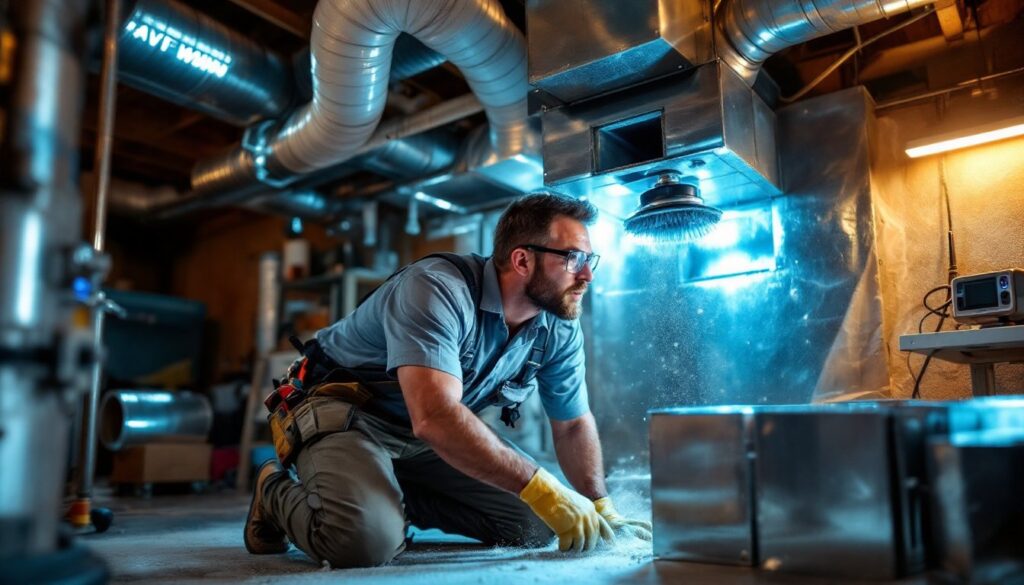
The actual cleaning involves using rotating brush tools, air whips (high-velocity air jets), and hand brushes to dislodge dust and debris clinging to duct interior surfaces. Technicians work section by section, pushing contamination toward the collection point. Flexible ducts require gentler agitation to avoid punctures: rigid ducts can handle more aggressive brushing.
Once the supply and return sides are cleared, the technician vacuums the return air plenum and furnace blower compartment, critical areas where a lot of debris accumulates. They may also clean or replace the furnace filter with a fresh one before restart. The whole process typically generates a large collection of dust and debris, which is why professional equipment is essential: handheld or shop-vac approaches don’t create sufficient suction or agitation to be effective. Finally, they’ll restore vent covers, run the system to verify airflow, and provide you with a summary of findings and photos if requested.
Conclusion
House air duct cleaning isn’t a glamorous home improvement project, but it’s one of the most practical investments you can make in your HVAC system’s health and your home’s comfort. When you spot signs of excess dust, reduced airflow, or haven’t had your ducts professionally serviced in years, scheduling a whole house duct cleaning pays dividends in efficiency, air quality, and system longevity. The upfront cost is modest compared to the cost of an emergency furnace repair or replacing an air conditioner years ahead of schedule. Get quotes from a few reputable contractors, ask for before-and-after documentation, and don’t skip this maintenance task.