A clean house exterior isn’t just about curb appeal, it’s about protecting your investment. Dirt, mold, mildew, and algae don’t just look bad: they can degrade siding, clog gutters, and accelerate deterioration of roofing and trim. Most homeowners overlook exterior house cleaning until stains become permanent or damage appears. The good news is that with the right approach, equipment, and technique, keeping your home’s outside in top shape is entirely manageable. This guide walks you through the most effective methods for cleaning different exterior surfaces, the tools you’ll actually need, and the reasons why staying on top of this maintenance matters more than you might think.
Key Takeaways
- Regular exterior house cleaning prevents structural damage by removing algae, mold, and debris that trap moisture and accelerate deterioration of siding, gutters, and roofing.
- A 2500–3000 PSI pressure washer with proper technique and appropriate cleaning solutions is sufficient for most residential exterior cleaning tasks, avoiding damage from excessive pressure.
- Gutters should be cleaned at least once annually (twice in humid or tree-filled areas) to prevent water drainage problems and foundation damage.
- Always use proper safety gear and fall protection equipment when cleaning upper-story siding or roof areas, and hire professionals for steep roofs or complex jobs.
- Different surfaces require different approaches: vinyl siding tolerates gentle pressure washing, while brick and stone need brushes and mild detergent to avoid mortar damage.
- A moss-killing solution combined with low-pressure rinsing is safer for roof cleaning than high-pressure washing, which can strip granules and void warranties.
Why Regular Exterior House Cleaning Matters
Neglecting your home’s exterior isn’t a cosmetic issue, it’s a maintenance one. Algae, mold, and mildew growth can trap moisture against siding, accelerating rot in wood and compromising the integrity of vinyl or composite materials. Gutters clogged with leaves and debris prevent proper water drainage, which can lead to foundation damage, basement leaks, and soffit deterioration. Roof moss and algae retain moisture, shorten shingle lifespan, and create safety hazards when you eventually need access up there.
Beyond structural concerns, regular cleaning preserves your home’s appearance and resale value. A house with clean siding, clear gutters, and bright windows instantly looks better maintained, and buyers or appraisers notice. Most experts recommend a thorough exterior cleaning at least once a year, with spot cleaning as needed between seasons. High-humidity regions or homes surrounded by trees may need twice-yearly attention. Catching and cleaning problem areas early prevents expensive repairs down the road.
Essential Tools And Equipment You’ll Need
Before you start, gather the right tools. You don’t need every gadget on the market, but a few key items make the work safer and faster.
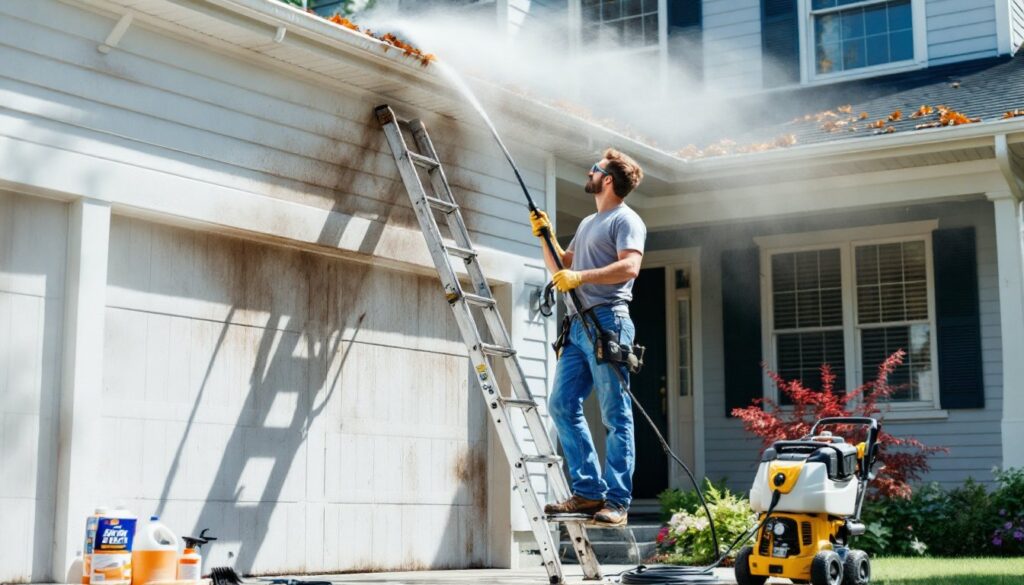
Pressure Washer: A 2500–3000 PSI pressure washer handles most residential exterior cleaning effectively. Entry-level electric models (around 2000 PSI) work for light jobs: gas models deliver more power but are louder and heavier. Never exceed 4000 PSI on siding or roofing, too much pressure forces water behind materials and causes damage.
Extension Ladders and Scaffolding: A sturdy 20-foot extension ladder or multi-position ladder is essential for reaching gutters and upper siding safely. For roof work, consider renting scaffolding or roof brackets, ladders alone are risky for extended work at height.
Cleaning Solutions: Invest in degreaser for concrete, mildew remover or oxygen bleach for siding, and gutter cleaner or defoliants depending on what you’re tackling. Avoid chlorine bleach on most siding: it can strip color and harm plants. Oxygen bleach (sometimes labeled “deck cleaner”) is gentler and effective.
Safety Gear: Wear ANSI-certified safety glasses, work gloves, and a respirator or N95 mask when working with cleaning solutions or pressure washers. Ear protection is necessary if using a gas pressure washer.
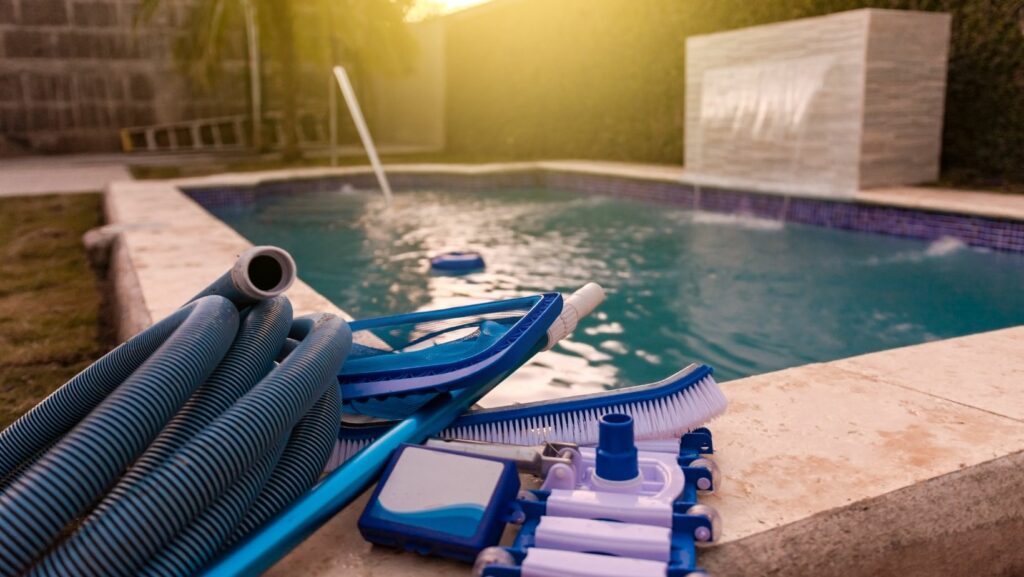
Accessories: A gutter scoop or wet/dry vacuum attachment speeds gutter cleaning. Extending wands and adjustable spray tips let you control water pressure and reach tight spots. Buckets, brushes, and cloths for detail work round out your kit.
How To Clean Different Exterior Surfaces
Siding, Brick, And Stone
Vinyl and composite siding respond well to a gentle pressure wash and cleaner combo. Set your washer to 1500–2000 PSI and keep the nozzle moving to avoid streaking. Use a wide-fan spray tip (40-degree) rather than a pinpoint jet. Mix oxygen bleach solution with water according to product instructions, apply it with a soft-bristled brush or low-pressure attachment, let it sit for 10–15 minutes, then rinse thoroughly.
For stubborn algae or mildew on vinyl, a pre-treatment with mildewcide or oxygen-based cleaner overnight before pressure washing saves effort. Always test in an inconspicuous spot first, some older siding finishes fade under aggressive cleaning.
Brick and natural stone require a lighter touch. Use a bristle brush and mild detergent rather than high-pressure spray, which can force water into mortar joints and damage the brick itself. Brick is porous: pressure above 1500 PSI risks eroding mortar. For heavy staining, a poultice paste (baking soda, white vinegar, and water) left for a few hours and scrubbed gently works well. Rinse thoroughly to avoid salt efflorescence (white powder deposits).
Roof And Gutters
Gutter cleaning is non-negotiable, it’s the most cost-effective maintenance task you can do. From a stable ladder or using a leaf blower, remove accumulated leaves and debris. Use a gutter scoop or your gloved hand (wear thick leather or nitrile gloves) to pull out compacted material, then flush with a hose to clear remaining silt. For homes surrounded by trees, consider installing gutter guards to reduce future debris accumulation.
Roof cleaning is trickier and should be attempted by DIYers only on low-slope roofs with proper fall protection. For steep roofs or homes over one story, hire a professional, roof work accounts for thousands of injuries annually. If you’re confident working at height, use rope safety lines rated for your weight and tie off to a secure roof anchor.
For light roof moss or algae, a gentle low-pressure spray (below 1500 PSI) with a moss-killing solution works. Apply the cleaner, let it sit per instructions (usually 15–30 minutes), then rinse lightly. Never power-wash downward at high pressure, you’ll strip granules and void shingle warranties. A safer alternative is installing zinc or copper roof strips at the ridge, which leach metals that inhibit moss growth naturally over time.
Conclusion
Keeping your house exterior clean and well-maintained protects your property’s structure and appearance. Start with gutters and easy-access areas, invest in a quality pressure washer and appropriate cleaning solutions, and always prioritize safety, especially on ladders or at heights. Know when to call a pro: roof work, three-story homes, or complex structural cleaning often justify professional help. A annual or twice-yearly deep clean, combined with seasonal spot-checking, keeps your home looking sharp and prevents costly repairs down the road.