A well-designed front yard sets the tone for the entire home, but not everyone has the time, budget, or skill to install in-ground gardens and hardscaping. Container gardening offers a practical, flexible alternative that delivers real visual impact without very costly or requiring years of planning. Front yard landscaping with pots works for any property, whether it’s a tiny apartment balcony, a suburban driveway entry, or a sprawling farmhouse entrance. Pots can be moved, refreshed, and rearranged seasonally, making them ideal for renters, property owners who like to experiment, and anyone wanting to boost curb appeal without permanent commitment. This guide walks through everything needed to design and maintain a container garden that looks intentional and polished year-round.
Key Takeaways
- Front yard landscaping with pots eliminates soil preparation, adapts to problem sites, and offers the flexibility to rearrange seasonally without permanent commitment.
- Choose larger pots (12–24+ inches diameter) with drainage holes in quality materials like ceramic, plastic resin, or concrete to ensure plant health and durability.
- Apply the thriller-filler-spiller concept—a tall focal plant surrounded by bushy plants with trailing spillers—to create dimension and intentional design in every container.
- Vary pot heights, sizes, and plant textures (fine and bold foliage) across your front entry, anchoring the strongest arrangements near the main door and secondary clusters along pathways.
- Water container plants when the top 2 inches of soil feels dry, fertilize every 2–3 weeks during growing season, and deadhead spent flowers to maintain blooms and year-round curb appeal.
Why Container Gardening Is Perfect for Front Yards
Container gardening solves real problems that traditional landscaping doesn’t. First, it eliminates soil prep headaches. No digging, no analyzing drainage, no correcting pH problems, fill a pot with quality potting mix and plant. Second, containers adapt to problem sites: too much shade for typical perennials? Use shade-tolerant plants in pots and move them as the sun angle shifts through seasons. Poor native soil full of clay or rocks? Skip it entirely and use containers. Third, containers let homeowners control water delivery. In-ground gardens compete with tree roots and suffer from inconsistent rainfall: container plants get targeted, consistent watering. Finally, pots are mobile. A potted arrangement that looked great in April might need repositioning by July as shadows change. Traditional beds stay put: containers evolve with the property’s needs. For renters or anyone hesitant about permanent landscaping investment, this flexibility is a game-changer.
Choosing the Right Pots and Planters
Pot selection affects both aesthetics and plant health, so it deserves careful thought. Larger containers are always better than undersized ones, they hold moisture longer, insulate roots better in temperature swings, and give plants more room to establish strong root systems. A front yard arrangement typically uses pots ranging from 12 inches to 24+ inches in diameter, with at least 12 inches of depth for most perennials and shrubs.
Drainage is non-negotiable. Every pot must have drainage holes in the bottom. If a pot lacks them, drill holes using a masonry bit (for ceramic and concrete) or a standard drill bit (for plastic and wood). Standing water kills roots and invites rot. Beyond that, material choice depends on climate, aesthetic preference, and budget.
Material Options and Durability
Ceramic and terra cotta offer classic appeal and come in countless colors and finishes. Terra cotta is breathable, which is great for preventing overwatering but can dry out fast in hot climates, a trade-off worth knowing. Ceramic glazed pots retain moisture better and last longer in freeze-thaw cycles. Both are heavier, providing stability in wind, but they’re fragile if dropped or hit with a shovel.
Plastic and resin pots are lightweight, durable, and affordable. They retain moisture well and don’t crack in freezing weather. Quality resin pots (not flimsy cell packs) hold up for years and look intentional, especially in neutral grays or blacks. Cheaper plastic pots degrade in UV light and often look temporary: spend a bit more for durability.
Concrete and stone pots are heavy, architectural, and built to last decades. They’re ideal for statement pieces near entries. Plan for multiple people or a hand truck to move them: a 24-inch concrete planter can weigh 100+ pounds when filled.
Wood planters (cedar or composite) suit rustic or cottage-style homes. Real cedar resists rot naturally but can splinter and weaken over 10+ years. Composite planters cost more but last longer and don’t require staining. Always elevate wood slightly off paving to allow air circulation underneath and prevent rot against concrete.
Choose materials that complement the home’s architecture. A modern minimalist house looks sharp with sleek resin or concrete: a cottage benefits from terracotta or weathered wood. Mix textures and finishes for visual interest, but keep the palette cohesive, too many competing styles feel cluttered.
Selecting Plants for Maximum Visual Impact
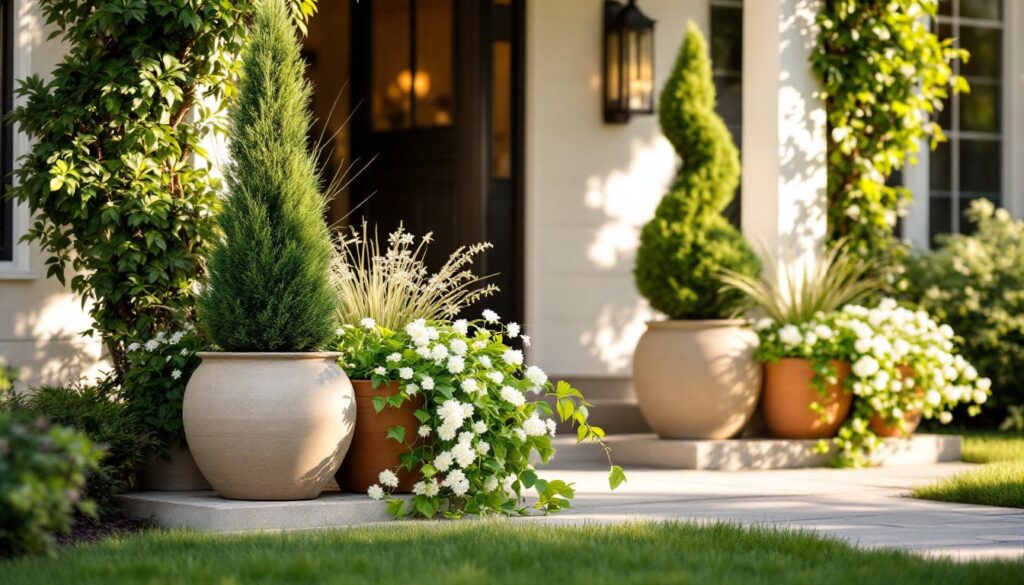
Plant selection determines whether a container garden looks like a deliberate design or an afterthought. The best front yard pots combine foliage interest (shape, color, texture) with seasonal flowers or structure. Most arrangements follow a thriller-filler-spiller concept: a tall focal plant in the center (thriller), bushy plants around it (fillers), and trailing plants spilling over the edges (spillers). This approach works because it creates dimension in a single pot and reads as intentional.
Choose plants suited to the site’s light exposure. Full sun (6+ hours of direct sun) opens doors to roses, ornamental grasses, petunias, and salvias. Partial shade (3–6 hours) works well with hostas, heuchera, impatiens, and ferns. Deep shade (less than 3 hours) limits options, but ferns, hellebores, and shade-tolerant evergreens deliver structure. Check hardiness zones, a plant labeled hardy to Zone 6 won’t survive outdoor winters in Zone 4 without extra protection (mulch, burlap wraps, or moving indoors).
Incorporate evergreen or year-round foliage plants. An all-annual design looks great June through September, then barren come November. Mixing in dwarf boxwoods, ornamental grasses, sedums, or evergreen ferns ensures the front entry looks polished even in winter. Variegated foliage (cream and green, or silver and purple) adds brightness without relying on flowers.
Creating Height and Texture Variation
Height variation prevents the front yard from looking flat. Pair tall, narrow plants (ornamental grasses like Miscanthus, columnar junipers) with mounding forms (boxwoods, catmint) and trailing spillers (ivy, sweet potato vine, bacopa). Within a single pot, this layering works best: place a 2–3 foot focal plant center-back, surround it with 12–18 inch mounding plants, and tuck spillers around the edges.
When arranging multiple pots across the front, vary pot heights and sizes too. Three pots of identical size in a row looks monotonous: one large, one medium, one small creates visual rhythm. Odd numbers, three or five pots, feel more intentional than even groupings.
Texture matters as much as color. Combine fine-textured plants (grasses, fennel, asparagus fern) with bold foliage (hosta leaves, ornamental cabbage, large-leaved heuchera). Smooth glossy leaves contrast beautifully against fuzzy or silvery ones. This mix keeps the eye engaged and prevents “botanical soup.”
Design Arrangement Strategies
Placement is where a good plant selection becomes a cohesive landscape. Walk around the front of the house and note entry points: the main door, garage entry, paths, porch corners. These anchor spots deserve the strongest design statements. Place one large arrangement near the front door (usually a grouping of 2–3 coordinated pots, not always a single specimen). This draws the eye and says “welcome.” Secondary clusters along a porch edge, beside garage entries, or flanking a fence opening provide visual punctuation without overwhelming.
Symmetrical placement (matching pots on either side of a door) feels formal and intentional. Asymmetrical groupings (varied sizes and shapes scattered naturally) feel relaxed and contemporary. Neither is inherently better: choose based on the home’s style. A Colonial-era house benefits from symmetry: a modern ranch suits asymmetrical clusters.
Color coordination ties the composition together. Stick to a limited palette: choose 2–3 dominant foliage colors and 1–2 accent flower colors. For example, use silvery foliage plants as anchors, pair them with burgundy accents, and add white or pale yellow flowers for brightness. Avoid planting “one of everything,” which creates rainbow chaos.
Consider sightlines from the street, not just from the front door. Passersby driving past or neighbors walking dogs should see a unified, attractive composition. Tall plants in shallow front pots block the house facade: position height toward back or edges. Arrange lower pots in tiers across the front so nothing hides behind a taller neighbor.
Maintenance Tips for Year-Round Appeal
Container plants need more attention than in-ground beds because they lack surrounding soil’s moisture reserves. Watering is the primary task: stick a finger 2 inches into the soil: if it’s dry, water until it drains from the bottom. Most established potted plants need water every 2–3 days in hot weather, less in cool seasons or rainy periods. Don’t water on a fixed schedule, let the soil guide you. Overwatering kills more containers than underwatering.
Feeding matters too. Containers exhaust their potting mix’s nutrients within 4–6 weeks. Apply balanced fertilizer (like 10-10-10) every 2–3 weeks during the growing season (spring through early fall). Switch to a lower-nitrogen blend (like 5-10-10) in late summer to harden plants before frost. Slow-release pellets mixed into soil at planting reduce feeding frequency but still require monitoring.
Deadheading, removing spent flowers, keeps annuals blooming prolifically. Pinch off faded blooms and it signals the plant to produce more flowers rather than set seed. Perennials and shrubs need less fussing but appreciate a light trim in spring to remove dead wood and shape form.
Seasonal transitions protect investments. Before the first hard freeze, move tender plants (tropical, frost-sensitive perennials, tender shrubs like fuchsia) indoors if climate permits, or relocate pots to a sheltered south-facing wall. In spring, refresh the top 2–3 inches of potting mix in established containers and add controlled-release fertilizer before planting annuals or new fillers. Refresh potting soil annually if possible, old, compacted soil drains poorly and harbors pests.
Watch for pests: spider mites, aphids, and scale insects cluster on container plants in dry environments. Spray infested plants with water to knock off pests, or use neem oil if problems persist. Regular inspection catches problems early. Move struggling containers to a nursery area (side yard, patio) until they recover, rather than letting them decline visibly at the front entry.
Conclusion
Front yard landscaping with pots delivers dramatic curb appeal without massive time or financial investment. The flexibility to change arrangements seasonally, move plants as needs shift, and customize designs to fit any space makes container gardening a smart choice for modern homeowners. Start with quality pots, honest plant selection suited to the specific site, and consistent care, the results speak for themselves.