Kitchen design in 2026 is moving away from trendy flash and toward thoughtful, lasting choices. Homeowners are investing in sustainable materials, integrating smart technology seamlessly, and creating spaces that balance stunning aesthetics with practical functionality. Whether someone is planning a full renovation or a strategic refresh, understanding the latest kitchen design trends helps ensure the investment holds value and appeal for years to come. This guide walks through the key design directions shaping modern kitchens right now, from eco-friendly finishes to flexible layouts and statement fixtures that actually make cooking easier.
Key Takeaways
- Latest kitchen design prioritizes sustainable materials like recycled glass countertops, reclaimed wood, and low-VOC finishes that combine environmental responsibility with durability and beauty.
- Smart kitchen technology has matured beyond gimmicks, with touchless faucets, motion-sensor lighting, and hardwired induction cooktops solving real problems while reducing energy waste and improving safety.
- Modern color palettes shift from all-white to warm grays, greige, and muted sage green, with jewel-tone accents on 20–30% of cabinetry creating sophistication without coldness.
- Flexible, semi-open kitchen layouts with varied-height islands and half-wall dividers replace traditional closed kitchens while maintaining visual connection and functional workflow zones.
- Strategic storage solutions—vertical pantry cabinets, drawer dividers, corner carousels, and appliance garages—eliminate clutter while keeping essentials accessible and kitchen design clean.
- Statement pendant lighting over islands and minimalist hardware in matte black or brushed brass finishes, paired with LED strip lighting, deliver personality and ambiance without major renovation.
Sustainable Materials Take Center Stage
Sustainable kitchen materials aren’t a niche trend anymore, they’re becoming the baseline expectation. Homeowners are choosing reclaimed wood, recycled glass countertops, and FSC-certified cabinetry (Forest Stewardship Council certified lumber ensures responsible forestry practices) because they look beautiful and align with environmental values.
Engineered quartz made from recycled content now rivals natural stone in durability and appearance, and it requires zero sealing, a practical win. Laminates have evolved too: brands offer water-resistant options using recycled materials that stand up to kitchen wear without the guilt.
For countertops, cork and bamboo are gaining traction as renewable alternatives. Cork is warm underfoot, naturally antimicrobial, and suppliers can replant cork oaks indefinitely. Bamboo grows rapidly and machines as easily as traditional hardwood.
Cabinet makers are moving toward low-VOC (volatile organic compound) finishes and water-based stains that don’t off-gas harmful fumes into the home. This matters: kitchen air quality affects everyone cooking and eating there daily. Look for third-party certifications like GreenGuard when selecting finishes and adhesives.
Smart Technology Integration
Smart kitchen gadgets have matured past the gimmick phase. Today’s integration focuses on solving real problems without making the kitchen feel like a tech showroom.
Smart appliances, refrigerators with inventory cameras, ovens that sync with cooking apps, and dishwashers controllable via smartphone, are becoming standard in new builds. The appeal: remote monitoring, energy tracking, and automation that genuinely save time and reduce waste.
Embedded touchless faucets with pull-down or pull-out sprays now include motion sensors and temperature memory, eliminating accidental splash and hand-washing fumbles when hands are wet or dirty. The tech is reliable: many don’t require annual maintenance if installed correctly.
Under-cabinet lighting with smart dimming adjusts color temperature throughout the day, warm light for evening cooking, cool light for food prep, and integrates with existing smart home systems. Installation is straightforward if wiring is planned during layout: retrofitting can be messy.
Hardwired induction cooktops with integrated ventilation systems that sense heat levels and adjust fan speed automatically are gaining ground. They’re safer (no open flame, cooktop stays cooler), more efficient than gas, and integrate with smart home ecosystems. The catch: they require dedicated 240V circuits and compatible cookware.
Color Palettes That Define Modern Kitchens
The all-white kitchen isn’t dead, but it’s no longer the default. 2026 design embraces deeper, warmer neutrals that feel intentional rather than sterile.
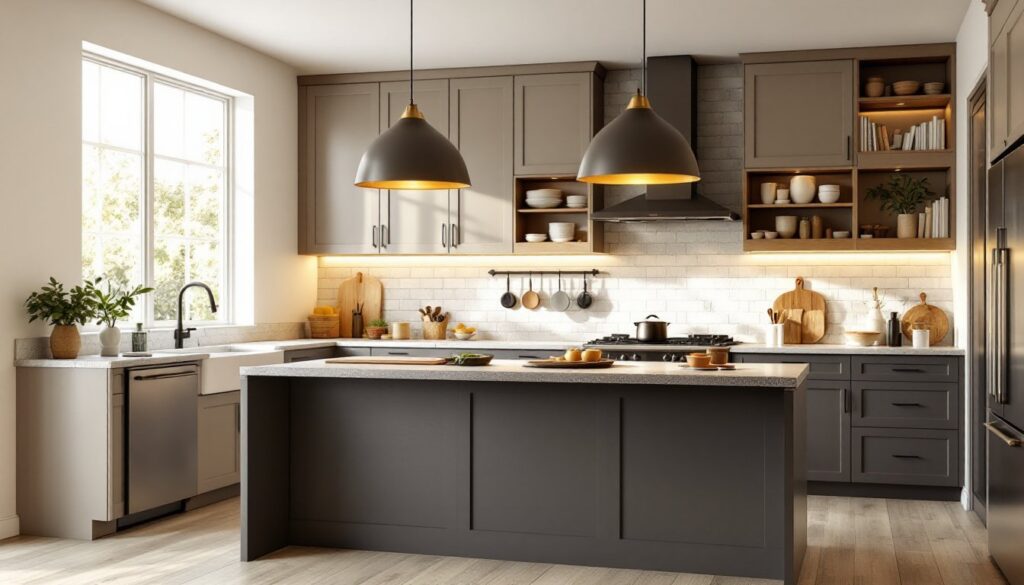
Warm grays, greige (gray-beige blend), and soft charcoal dominate cabinetry. These shades pair beautifully with brass, bronze, or matte black hardware, creating sophistication without coldness. Paired with natural wood open shelving or island bases, they add dimension and warmth.
Muted sage green and deep forest tones are strong secondary choices, especially for lower cabinets or feature walls. Green pairs naturally with wood and stone, drawing inspiration from outdoor spaces without feeling trendy or overly botanical.
For accent colors, jewel tones (emerald, sapphire, deep plum) appear as cabinet doors, tile backsplashes, or island faces. They work because they’re rich and grounded, not bright or whimsical. Balance is critical: use accent colors on 20–30% of cabinetry or as a single feature element to avoid overwhelming the space.
Countertop colors trend toward veining and variation rather than solid slabs. Natural stone-look engineered quartz with movement, dark base colors with white or gray veining, and leather-finish surfaces (slightly textured, matte) add visual interest and hide fingerprints and stains better than polished finishes. Wood tones remain popular for islands and open shelving, honey, walnut, and charred finishes all work in contemporary layouts.
Open Layouts and Flexible Spaces
Kitchen-living room boundaries continue to blur. Rather than a completely open plan, the trend is toward flexible, semi-open design where the kitchen feels connected to living areas but isn’t visually dominated by appliances and prep work.
Large islands function as the hub: food preparation, casual dining, and social gathering all happen there. Islands are moving toward varied heights, a 36-inch prep surface on one side, a 42-inch eating bar on the other, or tiered counters that define zones. This requires careful planning: seating depth, overhang length (15–18 inches is standard for comfortable legroom), and plumbing/electrical placement all factor in.
Half-walls and sightline design replace full closed walls. A 42–48 inch high divider or peninsula keeps cooking mess contained while maintaining visual connection. Some homeowners use glass-top half-walls to maximize light while hiding clutter.
Flexible zoning is critical: designate prep zones (cutting board, knife storage), cooking zones (stove, adjacent prep space), and cleanup zones (sink, dishwasher). This triangular workflow exists in kitchens from 80 square feet to 200+: good design just scales the distances appropriately.
For those needing true closed kitchens (small homes, ventilation constraints), pocket doors and sliding barn doors slide completely out of sight, opening kitchens only when desired. Installation requires planning, studs, electrical, and hardware placement can’t be improvised.
Maximizing Storage and Functionality
2026 kitchens prioritize hidden storage and multifunctional elements over visual clutter. Open shelving is still used, but strategically, displaying serving pieces and cookbooks, not storing everyday chaos.
Drawer dividers and custom inserts are essential: utensil trays, spice racks, pots-and-pans organizers, and pull-out cutting board inserts transform drawers from catch-alls into efficient systems. Soft-close drawers (hinges with built-in dampers) are now standard: they cost $15–30 extra per drawer but dramatically improve daily experience.
Vertical storage is maximized. Tall pantry cabinets (floor-to-ceiling, 24 inches deep) replace standalone pantries. Inside, pull-out shelves and wire baskets make accessing items at the back easy. Standard depth is 24 inches: going deeper wastes space because items get buried.
Corner solutions deserve attention. Corner cabinets traditionally waste space: modern carousel shelves and lazy Susan inserts let people access all corners without awkward reaching. Installation is straightforward if framed correctly.
Under-sink organization has evolved. Tiered organizers, pull-out trash and recycle bins, and waterproof liners keep the area functional and accessible. This is one of the highest-traffic zones: design it intentionally or it becomes a nightmare.
Appliance garages (cabinet-style covers that slide down to hide toaster, coffee maker, etc.) keep counters clean while keeping appliances accessible. They require 240V outlet, proper ventilation if used frequently, and careful measurement, a 24-inch garage fits most small appliances.
Statement Lighting and Hardware Details
Lighting and hardware are where kitchens earn personality. They’re also some of the easiest elements to update without major renovation.
Statement pendant lights over islands are dominating 2026. Brass, ceramic, or sculptural glass fixtures in warm finishes (not chrome or polished steel) create focal points. Install pendant lights 30–36 inches above the countertop surface, too low blocks sightlines, too high diminishes impact. Spacing matters too: for a standard 36-inch wide island, center one pendant: for 48+ inches, use two pendants spaced evenly.
Minimal, geometric hardware replaces fussy knobs. Bar pulls (2–4 inch lengths), edge pulls, and integrated handles (grooved cabinet edges without separate hardware) create clean lines. Matte black, brushed brass, and bronze finishes are dominant. Hardware finish should echo faucet finish for coherence.
Track lighting and recessed fixtures are still common for general kitchen lighting but increasingly paired with LED strip lighting under cabinets, inside glass cabinets, and along crown molding. LED strips create ambient light, hide shadows, and cost $2–6 per linear foot, way cheaper than new fixtures while feeling upscale.
Dimmers on all circuits are standard practice now. Kitchens need bright light for food prep (75–100 foot-candles at the work surface) but warm, low light for dining and socializing. Properly dimmed scenes don’t require buying new fixtures: they just reprogram the ambiance throughout the day and evening.
Conclusion
Kitchen design in 2026 rewards thoughtful planning over chasing aesthetics. Sustainable materials, smart integration, intentional color, flexible layouts, and functional storage create kitchens that work harder and age better. None of these trends require a complete overhaul, prioritizing one or two updates often delivers outsized impact and satisfaction. Whether refreshing cabinets, upgrading lighting, or reimagining the entire layout, the best kitchens reflect how people actually cook, gather, and live in them.