A front yard sets the tone for the entire home, it’s the first thing visitors see and the space that welcomes residents each day. Yet not everyone has the time, budget, or desire to maintain sprawling flower beds or complex irrigation systems. That’s where pots and rocks come in. This combination delivers dramatic visual impact with minimal fuss, transforming even a tired entryway into a modern, polished landscape. Whether someone is renting, facing water restrictions, or simply prefer low-maintenance curb appeal, pots and rocks offer flexibility, seasonality, and style without the learning curve of traditional gardening.
Key Takeaways
- Front yard landscaping with pots and rocks delivers dramatic visual impact with minimal maintenance, making it ideal for renters, water-restricted areas, and busy homeowners seeking low-maintenance curb appeal.
- Choose weather-resistant containers between 12–24 inches in diameter and group them in odd numbers with varying heights for visual rhythm, then flank or cluster them intentionally around your entry based on architectural style.
- Combine pots and rocks strategically by using gravel or crushed stone as filler and anchoring clusters with larger boulders, ensuring rock color echoes your pot palette for a cohesive, intentional look.
- Maintain container gardens by checking soil moisture every 2–3 days during growing season, deadheading spent flowers monthly, and refreshing plant combinations seasonally to keep your landscape feeling current and engaged.
- Design cohesion comes from choosing a consistent color story and pot aesthetic while considering light exposure—south-facing entries need heat-tolerant plants and lighter rocks, while north-facing spots suit shade-loving foliage with darker stones.
Why Pots and Rocks Are Game-Changers for Front Yard Design
Pots and rocks solve a host of landscaping headaches. Unlike in-ground gardens, containers let homeowners move plants seasonally, swap designs without digging, and adapt instantly to changing tastes. Rocks eliminate weeds, reduce watering needs, and create clean lines that feel intentional rather than neglected.
From a design standpoint, pots and rocks work together to create depth and structure. Rocks anchor the space visually, while potted plants add color, height variation, and softness. This layering approach appeals to modern sensibilities, it feels curated rather than cluttered.
They’re also forgiving. A container garden bounces back from neglect better than perennials. Rock arrangements don’t fade or wilt. If a plant dies or a design doesn’t click, swap it out without regret. That flexibility makes the front yard feel like an ongoing project rather than a permanent commitment, which lowers the psychological barrier to getting started.
Choosing the Right Pots for Your Front Yard
Material Selection and Durability
Pot material shapes the whole look and determines longevity. Ceramic and porcelain pots offer richness and variety, glazes, colors, and finishes abound. They’re heavier and look intentional, but they’re pricier and frost-prone in cold climates. In zones with hard freezes, avoid high-moisture ceramics unless they’re rated for outdoor winter storage.
Fiberglass and resin pots mimic stone, wood, or ceramic at a fraction of the cost and weight. They’re genuinely tough and won’t crack in winter. Downside: cheaper finishes age poorly in direct sun, fading or chalking within a couple seasons.
Concrete pots are trendy, durable, and neutral. They’re heavy, plan for that, and will absorb water and potentially stain over time. Seal them if color consistency matters. Terracotta is affordable and classic but notoriously fragile. It’s porous, so plants dry out faster, and it shatters if frozen wet.
For front-yard durability and minimal replacement, weather-resistant fiberglass in neutral tones or sealed concrete balance cost, appearance, and longevity.
Sizing and Placement Strategies
Size matters more than most realize. A tiny pot looks apologetic: an oversized one dominates. A good rule: use containers between 12–24 inches in diameter for most front entries, mixing heights to avoid monotony. Group three pots of varying heights together, say 14, 18, and 22 inches, for visual rhythm.
Placement should follow the focal points of the front door. Flank the entry with matching pairs if the architecture is symmetrical, or create an asymmetrical cluster on one side if the façade leans that way. Leave breathing room, overcrowding reads as clutter. Place pots where they won’t obstruct walkways, and ensure they’re stable if wind is common.
Using Rocks to Create Structure and Visual Interest
Rocks ground the design and tie pots to the landscape. They serve as mulch, suppressing weeds and reducing watering, while also adding texture and weight that makes the front yard feel intentional.
Gravel or crushed stone (⅜–½ inch diameter) works as filler between pots, softening hard edges and creating a finished bed look. Spread it 2–3 inches deep over a landscape fabric to minimize weeds. Common types include crushed granite, pea gravel, and river rock, each reads slightly different. Granite feels industrial: pea gravel is friendly and rounded: river rock suggests water features.
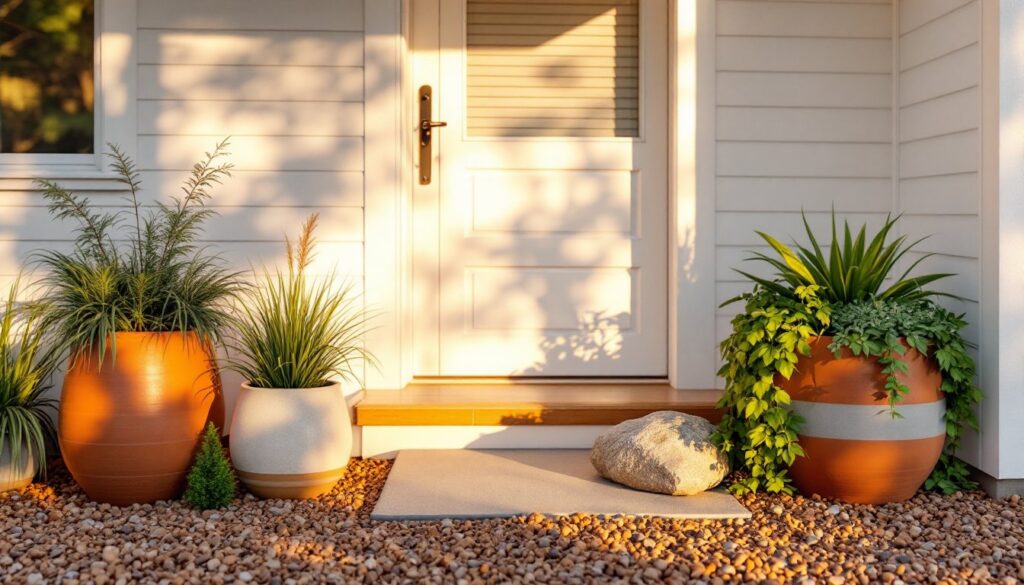
Boulders and decorative rocks (6–18 inches or larger) anchor clusters. A single statement boulder nestled beside a pot grouping adds sculptural interest without overthinking. Odd numbers and asymmetrical placement feel modern, while even placement reads formal. Choose rock color to echo the pot palette, warm terracottas pair with tan or rust-colored stones: cool grays go with river rock or slate chips.
Avoid rock bed depth over 2 inches unless addressing drainage issues: more looks excessive and makes maintenance harder. Rake out the landscape fabric every spring to keep rocks crisp and remove accumulated debris.
Designing a Cohesive Layout With Pots and Rocks
Cohesion comes from repetition and intentional contrast. Choose a color story: perhaps warm tones (terracotta, rust, cream) or cool (grays, blacks, whites), and let rocks, pots, and plant selections reinforce that palette.
Pot shapes should harmonize, too. Mix sizes, but keep the aesthetic consistent, all modern cylinders, all classical urns, or a blend with purpose. Mismatched styles read chaotic unless there’s a clear reason.
Consider the backdrop. A blank wall or fence benefits from tall plants in tall pots: busy siding pairs better with lower, more delicate arrangements. Evergreens (ornamental grasses, dwarf conifers, boxwood) provide year-round structure: seasonal annuals or perennials add color bursts.
Light matters. South-facing entries need heat-tolerant plants and lighter rocks (which reflect more heat). North-facing spots suit shade-loving foliage and darker rocks that absorb heat for faster soil warming in spring.
Start simple: one grouping of 3–5 pots, a scatter of rocks, one focal point boulder. It’s easier to add than subtract, and restraint reads more sophisticated than abundance.
Maintenance Tips to Keep Your Landscaping Looking Fresh
Container gardens need water more often than in-ground beds, check soil moisture every 2–3 days during growing season and adjust based on rainfall and temperature. Drip irrigation or soaker hoses reduce guesswork and save water compared to hand-watering.
Deadhead spent flowers on annuals and tender perennials monthly to extend bloom. Pinch back leggy growth early in the season. In fall, either overwinter tender plants indoors (geraniums, tender fuchsias) or treat them as seasonals and replant annually.
Rocks require minimal fuss but benefit from occasional raking to remove fallen leaves and keep lines crisp. Refresh rock beds every 2–3 years, some mix into soil, and unevenness becomes visible over time.
Pots need care between seasons. Drain standing water before hard freezes to prevent cracking. Consider moving sensitive ceramics to shelter or wrapping them if frost is common. Refresh the soil in containers annually or biannually, tired soil depletes nutrients and drains poorly. Top-dress with fresh mulch or small rocks to finish the look.
Check pot drainage holes regularly: debris clogs them. Refresh plant combinations seasonally, try mums in fall, ornamental kale in winter, or fresh annuals in spring. This approach keeps the front yard feeling current and engaged rather than static.