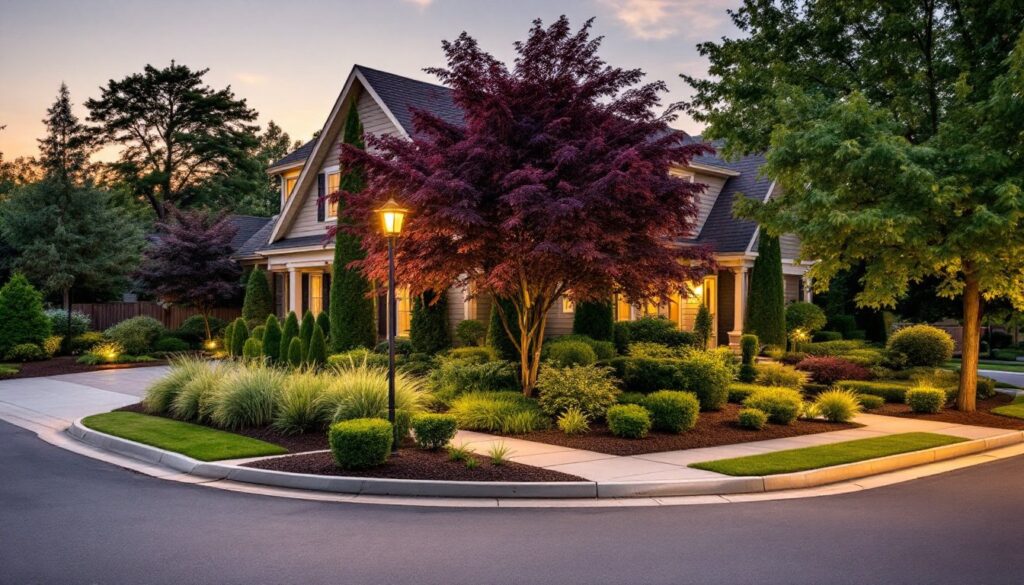
A corner lot is real estate gold, it offers double street frontage, more visibility, and a unique opportunity that most residential properties don’t have. But that visibility is a double-edged sword: your landscaping gets noticed from two sides, and any neglect shows twice as much. The good news is that thoughtful corner lot landscaping isn’t just about planting a few shrubs and hoping for the best. With strategic plant placement, smart hardscape design, and a clear understanding of sight lines, a homeowner can transform those two street-facing sides into a cohesive, welcoming landscape that boosts both curb appeal and property value. This guide walks through a practical landscaping strategy tailored to corner lots.
Key Takeaways
- Corner lot landscaping transforms double street frontage into a cohesive asset by using strategic plant placement, framework plants, and mirrored scale across both sides rather than identical plantings.
- Maintain clear sight triangles (10–15 feet along each street, under 3 feet in height) at corner intersections for traffic safety and comply with local sight line regulations before planting.
- Position a strong focal point at the corner or between front facades—such as a specimen tree, water feature, or hardscape element—to anchor the entire design and make it feel intentional.
- Unified hardscape design including consistent edging, pathways, and lighting on both street sides creates visual continuity and reinforces that the landscape is professionally designed, not assembled haphazardly.
- Select climate-appropriate plants suited to your lot’s specific microclimates (sun exposure, shade, wind patterns) and group them by water and light needs to simplify year-round maintenance and prevent visual neglect.
- Fresh mulch refreshed to 2–3 inches in spring and consistent seasonal maintenance are critical for corner lots, where maintenance lapses are twice as visible and directly impact both curb appeal and property value.
Understanding Your Corner Lot Advantage
A corner lot’s double frontage is an asset that deserves intentional design, not an afterthought. Unlike mid-block properties, corner lots are seen by traffic from two directions, which means neighbors, passersby, and potential buyers notice your landscape more often. That visibility, but, also means you need a cohesive vision that works when viewed from either street.
Start by assessing how the two street sides actually function. One side might face heavier traffic: the other might be quieter. One might receive morning sun while the other gets afternoon shade. These microclimates and functional differences shape everything from plant selection to hardscape placement. Walk around your lot at different times of day and note shadows, wind patterns, and sight lines from approaching vehicles.
Consider your corner’s geometry, too. Is it a sharp right angle, or do your property lines create an obtuse angle? The corner itself, that acute-angle wedge of land, is prime real estate for a focal point. It’s the first thing people see and the natural anchor for your overall design.
Strategic Plant Placement for Double Frontage
Planting a corner lot is about rhythm and balance across both street sides. Rather than creating identical plantings on each side (which often looks repetitive or forced), think of the two sides as parts of a larger composition. Mirror the scale and structure of plantings so the landscape feels intentional when viewed from either direction, but vary plant selections to suit sun exposure and soil conditions on each side.
Start with framework plants, the larger shrubs and small trees that define space and provide winter interest. These anchor the design and frame views into your property. A multi-stem small tree like a serviceberry or crabapple on one corner might be balanced by a tall evergreen shrub like a columnar juniper or boxwood on the other. This creates visual weight without duplication.
Layer in mid-size shrubs and perennials that tie the framework together. Dense plantings along property lines serve a dual purpose: they define boundaries and soften the view from the street. Keep sight triangles clear at the corner intersection so drivers can see oncoming traffic, typically a triangle from the corner extending 10–15 feet along each street, kept to under 3 feet in height.
Understory plantings, groundcovers, low perennials, and ornamental grasses, add texture and seasonal color without overwhelming the composition. These are the materials that change with seasons and let homeowners adjust the landscape’s mood year-round.
Creating Focal Points on Both Street Sides
Every corner lot needs at least one strong focal point, ideally positioned at the corner itself or along the line between the two front facades. This might be a specimen plant with striking color or form, a water feature, a decorative mailbox or arbor, or hardscape element like a stone planter. The focal point draws the eye and anchors the design, making the entire landscape feel intentional.
If the corner is sharp and visible, place a focal specimen there, perhaps a weeping Japanese maple or a columnar evergreen with dramatic winter structure. If the corner is less pronounced, a secondary focal point on each street (say, a planter grouping or small seating area) can work equally well. Make sure each focal point is visible and interesting from its corresponding street: you’re not hiding good design work.
Hardscape Design That Frames Both Perspectives
Hardscape, pathways, patios, walls, and edging, anchors the landscape and makes it feel finished. For corner lots, hardscape design should reinforce the sense that you’re viewing a complete, unified composition from either street.
A front walkway that leads from one street toward the house is standard: corner lots benefit from thoughtful pathway geometry that works with both frontages. If your house is set back equally from both streets, a diagonal or curved walk can serve both sides. If it’s closer to one street, a more direct approach from the primary street with a secondary walk or stepping stone pattern toward the corner reinforces flow and connectivity.
Edging, whether concrete, steel, or stone borders, defines planting beds and provides clean lines that read from a distance. On a corner lot, consistent edging around both sides creates visual continuity. A unified edging material (all steel, all stone, all concrete) sends a message that the landscape is designed, not assembled piecemeal.
Retaining walls, raised beds, or grade changes should serve both function and aesthetics. If one side of your lot slopes, a short retaining wall or series of terraced planting beds can handle drainage while creating architectural interest visible from both streets. Use materials and finishes that complement your home’s exterior and tie the two frontages together visually.
Lighting matters too, especially on a corner lot where evening visibility matters for safety and curb appeal. Uplighting specimen trees, path lighting along walkways, and low-voltage accent lighting on hardscape elements should illuminate both sides of the property. This isn’t just about looking good: it’s about making your corner lot feel secure and intentional 24/7.
Managing Sight Lines and Traffic Flow
Corner lots sit at the intersection of two sight lines, and landscaping that ignores traffic flow and visibility becomes a liability, not an asset. Before you plant anything tall near the corner, understand local sight triangle regulations, most jurisdictions (based on IRC and municipal codes) require clear sight lines from property corners extending 10–15 feet along each street, with nothing over 3 feet tall blocking driver or pedestrian views.
Check with your local code enforcement or planning department before you begin work. Some jurisdictions have specific requirements: others are flexible. Violating sight line ordinances can result in fines or a mandate to remove plantings, so it’s worth a five-minute phone call.
Within those constraints, you still have room to work. Keep the sight triangle itself open or planted with low groundcover. Behind that line, layers of taller shrubs and trees can create privacy and impact without blocking views. A semi-open screen of understory plantings (where you can see through the stems and foliage to the street beyond) provides enclosure without becoming a sight-line hazard.
Too many corner lots fall victim to overgrown foundation plantings or trees that obscure the home’s front entry and street number. Resist the temptation to plant densely for privacy if it means hiding your address or front door. You want people to find you, and potential buyers or visitors should feel welcome, not blocked out by a wall of green.
Seasonal Maintenance and Year-Round Appeal
A corner lot’s visibility means maintenance lapses show twice as much. Dead plants, overgrown shrubs, and neglected edging stand out immediately. Successful corner lot landscaping relies on species selection and design that you can actually maintain year-round.
Choose plants suited to your climate zone and local conditions, don’t rely on tender annuals or fussy specimens you’ll replace constantly. Deciduous trees and shrubs that hold their form in winter add structure when herbaceous plants have died back. Evergreens provide reliable winter interest: a mix of fine and broad-leaved textures keeps the view interesting year-round.
Create a simple maintenance rhythm: spring cleanup and mulch refresh, early-summer deadheading and pruning, fall leaf cleanup and structural pruning for winter interest, and winter inspection for damage. A corner lot doesn’t need obsessive care, but it does need consistent, visible attention.
Mulch refresh is especially important in high-visibility areas. Faded, thin mulch makes even healthy plants look tired: fresh 2–3 inch depth mulch in spring makes the whole planting read as intentional and cared-for. On a corner lot, that visual payoff extends to both street views.
Grouping plants by water and light needs simplifies care. Don’t scatter drought-tolerant plants among thirsty perennials: it’s harder to manage and often results in some plants thriving while others fade. Thoughtful grouping (shade plants in one zone, sun-loving perennials in another) means you can water and maintain each area appropriately.
Conclusion
Corner lot landscaping is an opportunity, not a burden. Strategic plant placement, cohesive hardscape design, attention to sight lines, and realistic maintenance expectations transform that double frontage into genuine curb appeal. A well-designed corner lot landscape doesn’t hide, it welcomes visitors from either direction and signals that the home itself is cared for and valued. Start with a clear vision, work with your lot’s natural characteristics and local codes, and commit to consistent seasonal maintenance. Your corner property will become a neighborhood asset that turns heads and adds measurable value.