A sloped front yard can feel like a landscaping problem waiting to happen. Water runoff, mowing challenges, and erosion make hillside properties trickier than flat ones, but they also offer unique design opportunities that flat yards simply can’t match. With the right approach to sloped front yard landscaping, homeowners can create eye-catching curb appeal while solving practical drainage and stability issues. This guide walks through proven strategies, from terracing and plant selection to hardscaping and erosion control, so anyone tackling a slope does it right the first time.
Key Takeaways
- Sloped front yard landscaping requires understanding your slope’s pitch (rise over run) and water flow patterns before choosing terracing, plant selection, or hardscaping solutions.
- Retaining walls and terracing flattened slopes into manageable steps, with spacing of 3–5 feet vertically and proper drainage behind walls to prevent soil erosion and sliding.
- Select plants based on slope gradient and microclimate conditions—groundcovers for under 25% grade, deep-rooted perennials for steeper pitches, and native shrubs that handle poor soil and varying moisture.
- Hardscaping elements like steps, walkways, and swales manage foot traffic and redirect water away from your foundation while enhancing curb appeal.
- Apply mulch (2–3 inches) and erosion control blankets during and after planting to stabilize soil, then maintain drainage systems year-round, especially during spring thaw and heavy rains.
- Check local building codes for retaining wall permits and setback requirements before starting your sloped front yard landscaping project.
Understand Your Slope’s Challenges and Opportunities
Before breaking ground, spend time observing the slope. Pitch, measured as rise over run (e.g., 1 foot of rise per 4 feet of horizontal distance, or 25%), determines what solutions work. A gentle slope under 15% is workable for most plants and shallow steps. Anything steeper than 30% likely needs terracing or structural support to prevent slides.
Water flow is critical. In heavy rain, a slope becomes a conduit for runoff. Poor drainage leads to erosion, washout, and standing water at the base. Mark where water naturally collects and plan hardscaping to redirect it. Clay-heavy soil drains slower than sandy loam: test your soil before planting.
Slopes also create microclimates. Uphill areas tend to dry faster: downhill zones may stay wetter longer. South-facing slopes get more sun and heat: north-facing slopes stay shadier and cooler. These variations actually let homeowners plant a wider diversity than a flat yard, if they work with the microclimate rather than against it.
Terracing and Retaining Walls for Stability and Style
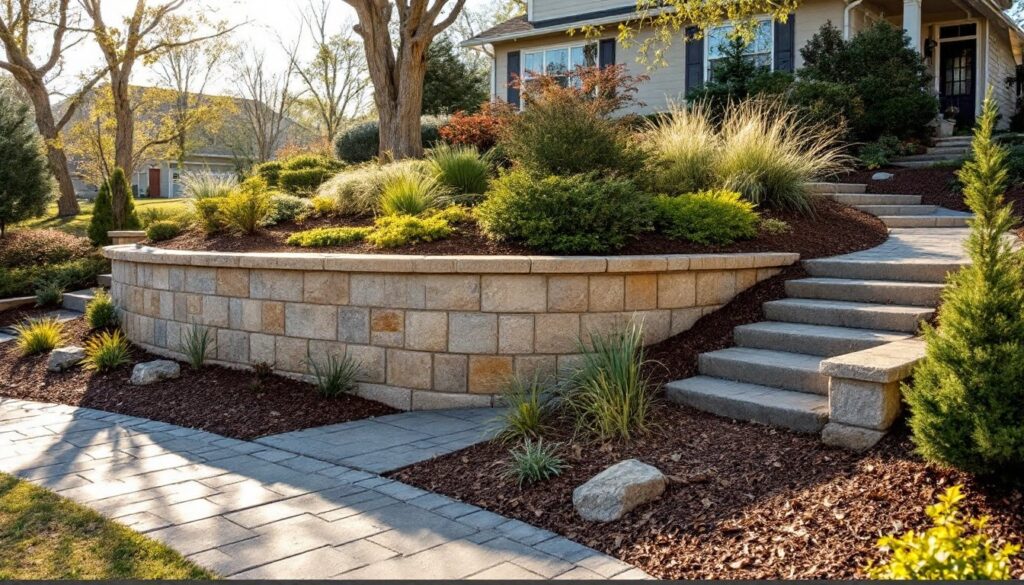
Terracing flattens a slope into stepped platforms, reducing erosion and making mowing or planting possible. A retaining wall (typically 2–4 feet tall for residential work) anchors each terrace and prevents soil from sliding downhill.
Building Functional Terraces
Small DIY walls (under 2 feet) made from stacked stone or timber deadwood (untreated logs) can work for gentle slopes and lighter loads. For anything taller or on steeper grades, building codes often require a licensed engineer or contractor. A properly built retaining wall includes a footing below frost line, adequate drainage behind the wall (usually perforated drain pipe and gravel), and proper backfill compaction.
Materials matter. Segmental concrete blocks with offset setback (each row stepping inward) work well and are easier for DIYers than mortared stone. Pressure-treated landscape timber is affordable but degrades within 10–15 years. Stone and brick last longer but cost more upfront. Steel or composite walls suit modern aesthetics but run higher in price.
Spacing terraces roughly 3–5 feet apart (measured vertically) keeps the slope manageable. Wider spacing = fewer walls but steeper slopes between terraces. Tighter spacing = more walls but gentler steps. Each terrace needs a slight backward slope (2–3% pitch) to shed water and prevent pooling.
Strategic Plant Selection for Slope Stability
Plants stabilize slopes through root systems that bind soil together. Choose species matched to your slope’s sun, moisture, and soil conditions, don’t fight the site.
For slopes under 25% grade, groundcovers like creeping juniper, sedum varieties, and ornamental grasses reduce erosion and need minimal maintenance once established. Deep-rooted perennials (black-eyed Susan, daylily) work better on steeper pitches. Avoid shallow-rooted plants or those needing constant water: they’ll fail on slopes where drainage is unpredictable.
Shrubs add structure and stability. Native options often suit slope conditions better than exotics. Bayberry, chokeberry, and viburnum handle poor soil and varying moisture. Trees on slopes should be species with lateral root systems (avoid species with tap roots on very steep ground). Keep tree density moderate so roots don’t compete and weaken slope integrity.
Planting density matters. Space plants closer on steeper slopes to achieve faster coverage and better erosion control. Space them wider on gentle slopes where growth room matters more. First-year establishment is critical: consistent moisture (not waterlogged) helps roots take hold before summer heat stress.
Hardscaping Solutions That Enhance Curb Appeal
Hardscape elements, paths, steps, and edging, manage foot traffic and water flow while framing the landscape visually.
Steps and walkways should tie the street to the front door without fighting the slope. Shallow steps with wide treads (12–14 inches) feel safer and less steep than steep steps. A 4:1 ratio of tread depth to riser height follows universal design principles. Steps made from pavers, stone, or poured concrete need solid base preparation and proper drainage to avoid heaving or cracking. Gravel or mulch paths work on gentler slopes but erode quickly on pitches over 20%, save those for terraced areas or steps.
Edging, whether metal, stone, or plastic, defines planting areas and slows runoff. Curved edging follows natural contours and looks better than rigid straight lines on slopes. Terraces and stepped planting beds are hardscaping too, they control erosion while creating visual interest.
Drains and swales (shallow channels) funnel water away from the house foundation and downhill to appropriate outlets. A rain garden, a shallow depression planted with moisture-tolerant plants, filters runoff and recharges groundwater. These practical elements also improve curb appeal when designed thoughtfully.
Erosion Control and Maintenance Best Practices
Erosion control during construction and after planting keeps soil in place and prevents washout. Silt fencing or erosion blanket (biodegradable matting) slows runoff on bare soil during planting. Coir or jute mesh works well on steep slopes where seeds struggle to germinate: it degrades naturally as plants take over.
After planting, mulch is essential. A 2–3 inch layer of wood chips or bark protects soil from raindrop impact and regulates moisture. On very steep grades, biodegradable erosion control blanket under mulch adds protection until plants establish. Avoid deep piling mulch against plant stems, it invites rot and pest issues.
Maintenance depends on plant choice and slope gradient. Groundcover slopes need annual weeding and occasional trimming as coverage fills in. Terraced areas with shrubs require seasonal pruning and deadheading. Hardscape elements need occasional debris clearing and drainage inspection.
Water management is year-round. Spring snowmelt and heavy fall rains are peak erosion times: check swales and drains for blockages. Summer watering should be deep and infrequent to encourage root development. Winter may require one extra inspection if your region freezes and thaws repeatedly, frost heave can unseat steps or walls.
Permit requirements vary by locale. Retaining walls over 3–4 feet often need a permit and engineer approval. Check local building codes before starting. Most jurisdictions have setback requirements from property lines and drainage standards. A quick call to your local building department costs nothing and prevents costly do-overs.
Conclusion
A sloped front yard isn’t a liability, it’s a chance to create distinctive landscaping that flat properties can’t match. By understanding the slope’s hydrology, adding terracing where needed, choosing plants that stabilize soil, and installing smart hardscaping, homeowners solve practical problems while boosting curb appeal. Start with observation, plan drainage first, and don’t skip prep work. A well-designed slope landscaping project pays off in durability and visual impact for years to come.